Hot Flashes and Insomnia After Hysterectomy: Why They Happen and What Helps
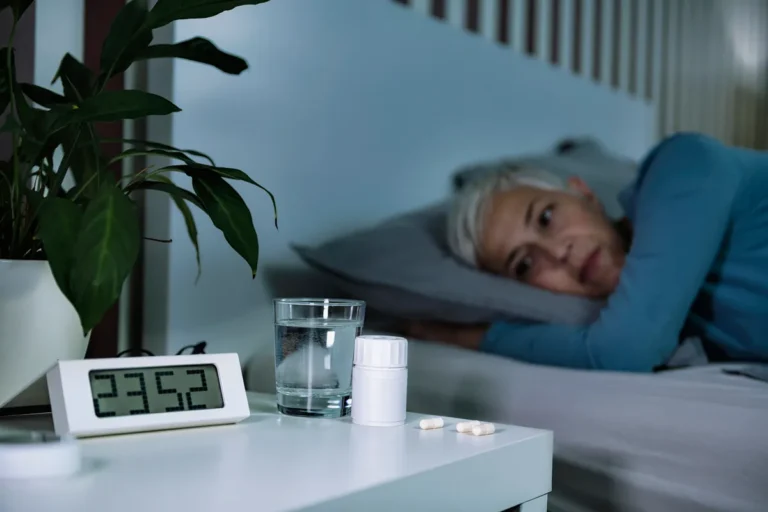
Hot flashes, night sweats and broken sleep are some of the most common complaints after a hysterectomy, and they often come together: a night sweat wakes you, and then you cannot get back to sleep. Whether you get them, and how strongly, depends mostly on one thing: whether your ovaries were removed. If they were, menopause starts straight away and symptoms can be intense.[1][3] If your ovaries were kept, a hysterectomy does not cause menopause, although it may arrive a little earlier than it otherwise would.[6][7] The good news is that there are effective treatments, with and without hormones, and a proven talking therapy for insomnia.[2][4][9] This guide explains why these symptoms happen, how long they tend to last, what the evidence says about each treatment, and when to see a doctor.
Why a hysterectomy can bring hot flashes and sleep problems
Hot flashes are caused by falling estrogen levels, which change how the temperature-control center in the brain works. The uterus does not make estrogen; the ovaries do. So the type of operation you had matters far more than the fact that you had a hysterectomy.
If both ovaries were removed
Removing both ovaries (bilateral oophorectomy) before your natural menopause causes surgical menopause. Estrogen drops within days rather than over several years, so hot flashes and night sweats can start soon after the operation and are often more severe than in natural menopause.[1][3] Sleep problems, mood changes and vaginal dryness may follow. Our guide to surgical menopause covers this in detail.
If your ovaries were kept
If one or both ovaries stay, they keep making hormones and you do not go into menopause after surgery. Studies suggest, though, that women who have a hysterectomy with their ovaries kept tend to reach menopause somewhat earlier than women who have not had surgery, possibly because the operation affects part of the blood supply to the ovaries.[6][7] Without periods, hot flashes and night sweats are often the first sign that menopause is starting. Our article on menopause after hysterectomy with ovaries intact explains how to recognize it.
Whether you had a partial (supracervical) or total hysterectomy makes no difference here: both remove the uterus, and neither removes the ovaries unless that is done as a separate step. The differences are explained in our guide to partial vs total hysterectomy.
In the first weeks after surgery
Poor sleep in the first weeks is common whatever kind of hysterectomy you had. Pain, a sore abdomen when you turn over, wind, a hospital bed, some painkillers and the stress of surgery all get in the way. Feeling warm or sweaty at night can also be part of normal recovery. If your ovaries were kept, these early symptoms usually settle as you heal. Our article on how to sleep after a hysterectomy covers comfortable positions and getting in and out of bed, and recovery week by week shows what to expect as you heal. A fever or chills with sweating is different: it can be a sign of infection and needs a call to your surgical team.[16]
What hot flashes and night sweats feel like
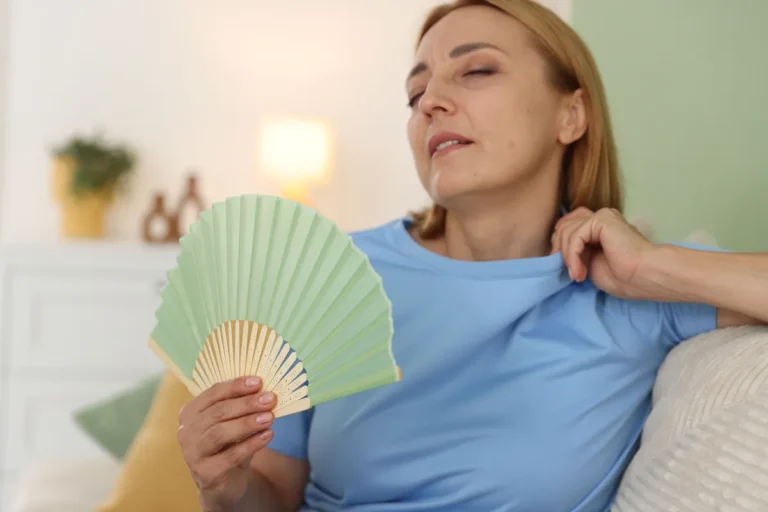
A hot flash is a sudden feeling of heat, usually in the face, neck and chest, that can come with flushing, sweating and a fast or pounding heartbeat. It typically lasts a few minutes and may be followed by feeling cold or shivery. Night sweats are hot flashes during sleep. They can be mild or soak your nightclothes and sheets. Some people get a handful a week; others get many a day.[2][3]
How long do hot flashes last?
There is no fixed timeline. In natural menopause, the large US SWAN study found that frequent hot flashes lasted a median of about 7.4 years in total, and longer for women whose symptoms began early in the transition.[5] There is less long-term research on surgical menopause, but symptoms often start abruptly and can be strong, especially in younger women.[1][3] The length of time matters less than how much the symptoms affect you: if they disturb your sleep, work or mood, they are worth treating, whenever they started.
How hot flashes and insomnia feed each other
Night sweats can wake you several times a night. After a few weeks of this, many people start lying awake worrying about sleep, which makes it harder to drop off even on nights without sweats. That is how short-term sleep problems can turn into longer-lasting insomnia. Treating the hot flashes often helps sleep, but if the insomnia has taken on a life of its own it may need its own treatment, described below.[2][8]
Not every sleep problem around menopause is caused by hot flashes. Low mood, anxiety, pain, needing to pee at night and other sleep disorders can play a part. Loud snoring, gasping or choking in your sleep, or feeling very sleepy during the day despite a full night in bed are worth mentioning to your doctor, because they can be signs of sleep apnea, which needs different treatment.
Hormone therapy: the most effective treatment
Hormone therapy (HT, also called HRT) is the most effective treatment for hot flashes and night sweats, and it often improves sleep as a result.[2][3] For most healthy women under 60, or within 10 years of menopause, The Menopause Society considers the benefits to outweigh the risks for bothersome symptoms.[3]
- Estrogen alone if you have no uterus. A progestogen is added to estrogen to protect the lining of the uterus. Without a uterus, most women can take estrogen on its own.[2][3] Your doctor may still suggest a progestogen in some situations, for example if you had endometriosis, so ask.[3]
- Patches, gels or sprays deliver estrogen through the skin. They do not raise the risk of blood clots the way tablets can, which makes them a common first choice for some women.[2][3]
- If your ovaries were removed before about 45, guidelines generally advise taking hormones at least until the average age of natural menopause, unless there is a medical reason not to. This is about protecting your bones, heart and brain, not just about symptoms.[2][17]
- Estrogen-only therapy and breast cancer. In the long-term follow-up of the Women’s Health Initiative trials, women without a uterus who took estrogen alone had fewer breast cancers than those who took a placebo.[14]
In November 2025, the FDA announced it would remove the boxed warnings about heart disease, breast cancer and dementia from menopausal hormone therapy labels, while keeping the warning about endometrial cancer for estrogen-alone products, which is relevant only if you still have a uterus.[13] Hormone therapy is still not suitable for everyone, for example after some breast cancers or after a blood clot or stroke, so the decision is one to make with your doctor. Our article on hysterectomy and hormones has more background.
Medicines without hormones
If you cannot or prefer not to take hormones, several prescription medicines reduce hot flashes. The Menopause Society’s 2023 review of non-hormone treatments recommends these, based on good evidence:[4]
- Fezolinetant (Veozah) and elinzanetant (Lynkuet). These newer medicines act directly on the brain’s temperature-control center. The FDA approved fezolinetant in 2023 and elinzanetant in October 2025.[10][12] Fezolinetant carries a boxed warning about rare but serious liver injury, so you need blood tests before and during the first months of treatment. Stop it and call your doctor if you notice yellow skin or eyes, dark urine, pale stools, unusual itching or pain in the upper right abdomen.[11]
- Certain antidepressants (SSRIs and SNRIs), such as paroxetine, escitalopram, citalopram, venlafaxine or desvenlafaxine, at lower doses than are used for depression. A low-dose form of paroxetine is FDA-approved for hot flashes. Some of these interact with tamoxifen, so tell your doctor if you take it.[4]
- Gabapentin, taken at bedtime, can reduce night sweats. Drowsiness and dizziness are common side effects, which is why it is usually taken at night.[4]
- Oxybutynin, a bladder medicine, also reduces hot flashes, but it is often avoided in older women because long-term use may affect memory.[4]
The same review did not recommend herbal remedies and supplements (such as black cohosh or soy extracts), acupuncture, cannabis products or clonidine for hot flashes, because the evidence that they work is weak or inconsistent.[4] Supplements are not tested the way medicines are, and some can interact with other drugs.
Cognitive behavioral therapy and hypnosis
Two talking or mind-body therapies have good evidence behind them:
- Menopause-specific cognitive behavioral therapy (CBT) reduces how much hot flashes bother you and improves sleep. The UK’s National Institute for Health and Care Excellence (NICE) recommends it alongside or instead of hormone therapy, and The Menopause Society also recommends it.[2][4]
- Clinical hypnosis with a trained practitioner has been shown to reduce hot flashes.[4]
CBT for insomnia (CBT-I)
For insomnia that has lasted three months or more, the American Academy of Sleep Medicine strongly recommends cognitive behavioral therapy for insomnia (CBT-I) as the first treatment.[9] It also works for women going through menopause: in a US trial of women aged 40 to 65 who had both insomnia and hot flashes, six telephone sessions of CBT-I improved insomnia much more than a menopause education program, and the benefit was still there six months later.[8] CBT-I is available from sleep psychologists, through some health plans, and as structured online or app-based programs. Its main parts are:
- A fixed wake-up time every day, including weekends, whatever kind of night you had.
- Bed only for sleep and sex. If you are lying awake and frustrated, get up, do something calm in dim light, and go back when you feel sleepy.
- Less time in bed at first. Shortening the time you spend in bed to match how much you actually sleep, then slowly extending it, makes sleep deeper and more reliable. This is best done with guidance.
- Working on the worry. Learning to challenge thoughts like “I’ll never cope tomorrow” makes it easier to fall back asleep.
General “sleep hygiene” advice on its own, such as avoiding screens and caffeine, is not enough to treat chronic insomnia, although it is a sensible base.[9] Sleeping pills can help for a few nights in a crisis, but they are generally meant for short-term use only.[15]
Making nights more comfortable
Simple measures like a cooler bedroom are widely suggested. Research has not shown that they reduce the number of hot flashes, so The Menopause Society does not recommend them as a treatment.[4] But many women find they make night sweats easier to sleep through, and they cost little:
- Keep the bedroom cool, with a fan or an open window if it is safe.
- Use light bedding in layers you can throw off, and light cotton or moisture-wicking nightwear.
- Keep a glass of cold water and a spare top by the bed so you do not have to get fully up.
- Notice whether anything seems to set off your hot flashes, such as alcohol, caffeine, spicy food or a hot drink before bed, and cut back if it helps you.
- Keep up gentle daily activity as you recover. It is good for sleep, mood, bones and heart, even if it does not stop hot flashes.
When to see a doctor
Contact your surgical team or doctor promptly if, in the weeks after surgery, night sweats come with a fever, chills, worsening pain, or smelly discharge or redness around a wound. These can be signs of infection.[16]
Make an appointment if:
- hot flashes or poor sleep are affecting your work, relationships or mood
- you are under 45 and have hot flashes, whether or not your ovaries were removed[2][17]
- you have night sweats together with unexplained weight loss, ongoing fevers or swollen glands
- you snore loudly, stop breathing or gasp in your sleep, or are very sleepy during the day
- insomnia has lasted more than a few weeks despite the steps above[15]
- you have had breast cancer or another hormone-sensitive condition and are bothered by hot flashes: talk to your oncologist about which treatments are safe for you
If low mood is making you feel hopeless or you are having thoughts of harming yourself, call or text 988 (the Suicide and Crisis Lifeline in the US) or go to the nearest emergency room.
Questions to ask your doctor
- Were my ovaries removed, kept, or only partly removed? Should I expect menopause symptoms?
- Is estrogen-only hormone therapy suitable for me? Would a patch or gel be better than a tablet?
- If I can’t take hormones, which non-hormone medicine would you suggest, and what are its side effects?
- Can you refer me for CBT or CBT-I, or recommend an online program?
- Could something other than menopause be behind my night sweats or poor sleep?
If you are still preparing for surgery, ask before the operation whether your ovaries will be removed and what that means for you. Our tips before your hysterectomy and frequently asked questions about hysterectomy can help you plan your questions, and our guide to partial hysterectomy explains the main types of surgery.
Key points
- Hot flashes after a hysterectomy depend mainly on your ovaries: removing both causes sudden menopause; keeping them does not, though menopause may come somewhat earlier.
- Poor sleep in the first weeks after surgery is common and usually improves as you heal. Fever with night sweats needs a call to your surgical team.
- Hormone therapy is the most effective treatment. Without a uterus, most women can take estrogen alone.
- Effective non-hormone options include fezolinetant, elinzanetant, some antidepressants, gabapentin, CBT and clinical hypnosis.
- CBT-I is the recommended first treatment for long-lasting insomnia, including around menopause.
- Cooling measures do not reduce hot flashes, but they can make nights more comfortable.
Sources
- Royal Free London NHS Foundation Trust. Surgical menopause. Patient information leaflet. royalfree.nhs.uk
- National Institute for Health and Care Excellence. Menopause: identification and management (NG23). nice.org.uk
- The 2022 Hormone Therapy Position Statement of The North American Menopause Society Advisory Panel. The 2022 hormone therapy position statement of The North American Menopause Society. Menopause. 2022;29(7):767–794. pubmed.ncbi.nlm.nih.gov
- The 2023 Nonhormone Therapy Position Statement of The North American Menopause Society Advisory Panel. The 2023 nonhormone therapy position statement of The North American Menopause Society. Menopause. 2023;30(6):573–590. pubmed.ncbi.nlm.nih.gov
- Avis NE, Crawford SL, Greendale G, et al. Duration of menopausal vasomotor symptoms over the menopause transition. JAMA Internal Medicine. 2015;175(4):531–539. pubmed.ncbi.nlm.nih.gov
- Farquhar CM, Sadler L, Harvey SA, et al. The association of hysterectomy and menopause: a prospective cohort study. BJOG. 2005;112(7):956–962. pubmed.ncbi.nlm.nih.gov
- Moorman PG, Myers ER, Schildkraut JM, et al. Effect of hysterectomy with ovarian preservation on ovarian function. Obstetrics & Gynecology. 2011;118(6):1271–1279. pubmed.ncbi.nlm.nih.gov
- McCurry SM, Guthrie KA, Morin CM, et al. Telephone-based cognitive behavioral therapy for insomnia in perimenopausal and postmenopausal women with vasomotor symptoms: a MsFLASH randomized clinical trial. JAMA Internal Medicine. 2016;176(7):913–920. pubmed.ncbi.nlm.nih.gov
- Edinger JD, Arnedt JT, Bertisch SM, et al. Behavioral and psychological treatments for chronic insomnia disorder in adults: an American Academy of Sleep Medicine clinical practice guideline. Journal of Clinical Sleep Medicine. 2021;17(2):255–262. pubmed.ncbi.nlm.nih.gov
- U.S. Food and Drug Administration. FDA approves novel drug to treat moderate to severe hot flashes caused by menopause. May 12, 2023. fda.gov
- U.S. Food and Drug Administration. FDA adds warning about rare occurrence of serious liver injury with use of Veozah (fezolinetant) for hot flashes due to menopause. Drug Safety Communication, September 2024, updated December 2024. fda.gov
- Contemporary OB/GYN. FDA approves elinzanetant (Lynkuet) for vasomotor menopausal symptoms. October 24, 2025. contemporaryobgyn.net
- U.S. Food and Drug Administration. HHS advances women’s health, removes misleading FDA warnings on hormone replacement therapy. November 10, 2025. fda.gov
- Chlebowski RT, Anderson GL, Aragaki AK, et al. Association of menopausal hormone therapy with breast cancer incidence and mortality during long-term follow-up of the Women’s Health Initiative randomized clinical trials. JAMA. 2020;324(4):369–380. pubmed.ncbi.nlm.nih.gov
- NHS. Insomnia. nhs.uk
- MedlinePlus (US National Library of Medicine). Hysterectomy – laparoscopic – discharge. medlineplus.gov
- ESHRE, ASRM, CREWHIRL and IMS Guideline Group on POI; Panay N, et al. Evidence-based guideline: premature ovarian insufficiency. Human Reproduction Open. 2024;2024(4):hoae065. pubmed.ncbi.nlm.nih.gov
This article is for general information and is not a substitute for medical advice. Talk to your gynecologist or doctor about which treatment for hot flashes or sleep problems is right for you, and contact them or emergency services if you are worried about any symptom.