Swelly Belly After Hysterectomy: Why Your Stomach Swells and What Helps
“Swelly belly” is the nickname many patients use for the puffy, tight, bloated lower belly that often shows up after a hysterectomy. Your belly may look rounder than before, your waistband may feel tight, and you may wonder whether something has gone wrong. In most cases it is part of normal healing: the bowel slows down after surgery, gas gets trapped, and the tissues around the operation are swollen while they repair.
This guide explains what causes the swelling, how long the different parts of it usually last, what actually helps according to the evidence, and the warning signs that mean you should call your surgeon instead of waiting it out.
What is “swelly belly”?
“Swelly belly” is not a medical diagnosis. It is a patient term that covers several things that can happen at the same time after surgery on the abdomen or pelvis:
- Bloating and trapped gas while the bowel “wakes up” after the operation.
- Constipation, which is common after surgery and with some pain medicines.
- Swelling of healing tissue around the incisions and inside the pelvis.
- Leftover gas from keyhole surgery, which can cause a full feeling and pain in the shoulder.
It can happen after any type of hysterectomy, whether it is a partial (supracervical) or total hysterectomy, and whether it is done through one larger cut, keyhole incisions or the vagina. If you are not sure which operation you had, our guide to what a partial hysterectomy is and how it is done explains the main types.
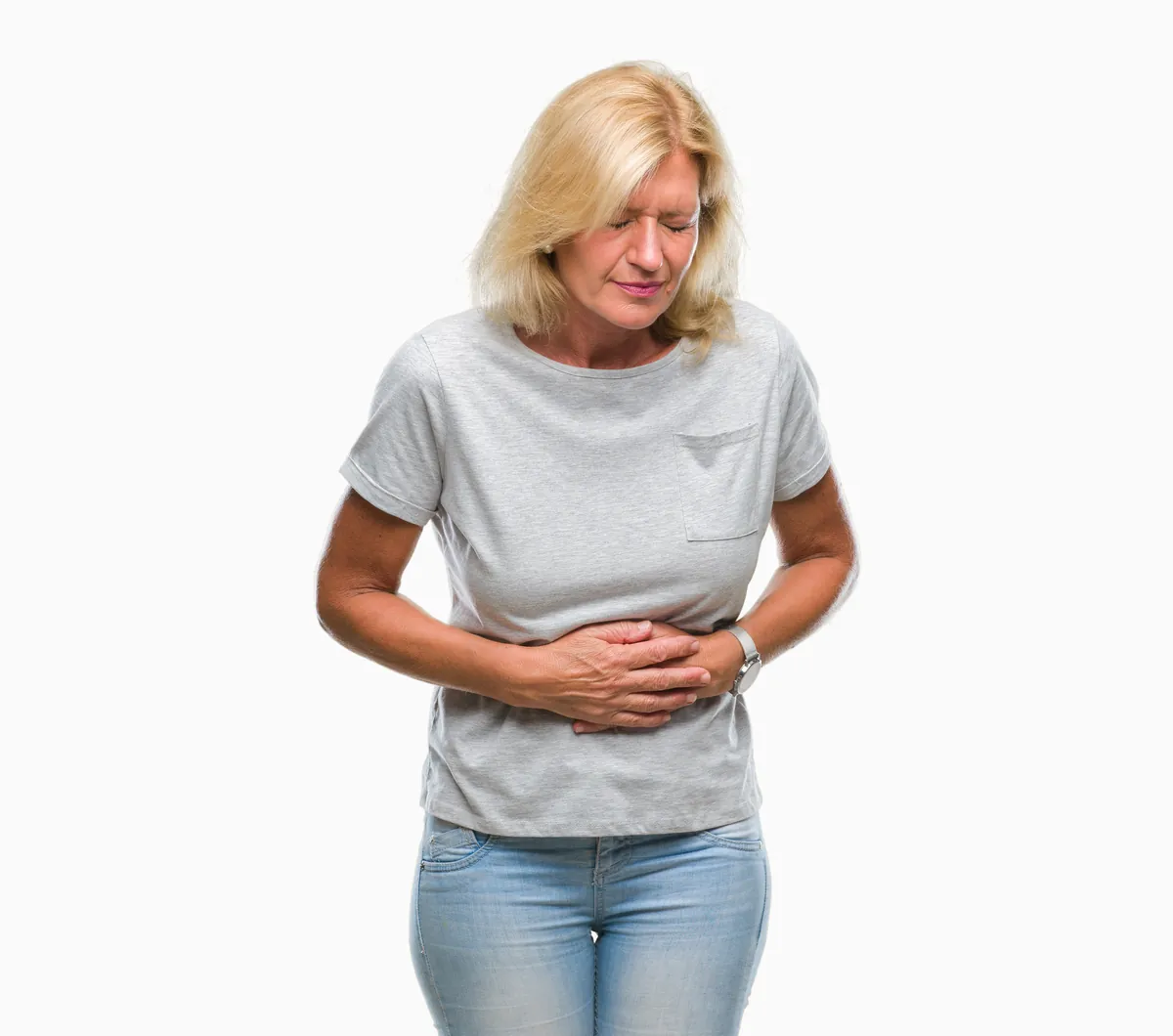
Why your belly swells after a hysterectomy
Your bowel slows down for a while
After an operation, the gut often moves more slowly for a time. Hospital leaflets from the Royal College of Obstetricians and Gynaecologists (RCOG) explain that the bowel may temporarily slow down, so air (“wind”) gets trapped and causes discomfort until it passes. Several hospitals note that wind pains are most common on the second and third day after surgery.
Doctors call a more marked slowdown postoperative ileus. The colon is usually the last part of the gut to regain its normal movement, often within about 72 hours, but medical definitions of prolonged ileus vary. Opioid pain medicines, bowel handling during surgery and immobility can contribute. A 72-hour mark is not a way to diagnose yourself: contact your surgical team if symptoms persist or worsen, especially if you cannot pass gas or stool, have increasing abdominal swelling, nausea or vomiting.
Gas left over from keyhole surgery
During laparoscopic or robotic surgery, the surgeon fills the abdomen with carbon dioxide gas to create space to work. Some of this gas can stay behind for a short time. Besides a full, bloated feeling, it can irritate a nerve under the diaphragm and cause pain at the tip of the shoulder. A Cochrane review notes that up to 80% of women having gynecological keyhole surgery may get shoulder-tip pain. The body usually absorbs the gas within a day or so, and moving around helps.
Constipation and pain medicine
Constipation adds to the swollen feeling. Codeine-type pain medicines are a well-known cause, and many hospitals send patients home with a laxative or stool softener for this reason. The aim is soft stools that are easy to pass, so you do not need to strain while your wounds heal.
Swelling of healing tissue
Any surgical wound swells as part of the healing process, and the area around and above a lower incision can feel firm or swollen for a while. This tends to be more noticeable after open surgery with a larger incision. Our article on hysterectomy scars and how each type of incision heals shows what normal healing looks like.
How long does swelly belly last?
There is no single timeline, and research on this specific symptom is limited. What the evidence and hospital guidance do show is that the different causes settle at different speeds:
- Shoulder-tip pain and keyhole gas: usually a day or two.
- Trapped wind: most noticeable in the first few days; it eases once your bowels start moving.
- Bowel habit: it can take some time to return to normal, especially if you are taking opioid pain medicine.
- Tissue swelling: improves gradually over the following weeks as you heal and become more active.
RCOG guidance says most women who build up their activity gradually are back to their usual activity levels within four to six weeks after an abdominal hysterectomy. What matters most is the trend: swelling that slowly gets better is reassuring; swelling that gets worse, or comes with the warning signs below, is not. For a broader view of the recovery period, see our week-by-week recovery guide.
What helps with bloating after a hysterectomy
Walk little and often
Getting up and walking is one of the most consistently recommended measures. RCOG advises that walking around helps trapped wind, and early walking is also used to prevent postoperative ileus and blood clots. You do not need long walks: short, frequent walks around the house are a good start, building up gradually. RCOG notes that many women can walk for 30 to 60 minutes after two or three weeks.
Keep your stools soft
Drinking plenty of fluids and eating fruit, vegetables and other fibre helps prevent constipation. MedlinePlus suggests smaller, more frequent meals and about 2 liters of water a day. If you were given a laxative or stool softener, take it as directed, and ask your surgeon or pharmacist if you have not had a bowel movement after a few days at home.
Peppermint water or peppermint tea

RCOG patient leaflets say peppermint water may ease discomfort from trapped wind. The evidence is modest, but it is a low-risk option to try. A warm peppermint tea is a similar, easy-to-find alternative if you like it.
Chewing gum and coffee
A Cochrane review of 81 trials with more than 9,000 participants found some evidence that chewing gum after surgery helps people pass wind and have a bowel movement sooner, with few side effects. Most of the studies were in bowel surgery and cesarean section, and many had a high or unclear risk of bias.
A randomized trial of 114 women found that coffee three times a day helped bowel function return sooner after open hysterectomy and extensive staging surgery for gynecologic cancer. This was a single hospital-based study after major surgery, so it is a possible option to discuss with your care team, not a proven home treatment. If you do not normally drink coffee, there is no need to start.
Wear soft, loose clothing
Waistbands that press on a swollen belly or a fresh incision can be uncomfortable. High-waisted, stretchy pants or loose dresses are easier to wear in the first weeks. Our checklist for getting ready before surgery includes clothing and other things worth preparing in advance. If your surgeon gave you an abdominal binder, follow their instructions on how and when to use it.
Ask before adding medicines
Over-the-counter remedies for gas and constipation can interact with your other medicines or may not suit your situation. Check with your pharmacist or surgical team before taking anything new, especially if you are still on prescription pain medicine.
Swelling or weight gain?
A swollen belly in the first weeks after surgery is mostly fluid, gas and healing tissue, not fat. Later changes in your shape can have other causes, such as less activity during recovery or hormone changes if the ovaries were removed. Our article on weight changes after a hysterectomy looks at this in more detail. A gentle return to movement, including good posture when you sit (see how to sit after a hysterectomy), also helps you feel more comfortable as the swelling settles.
Warning signs: when bloating is not normal
Contact your surgeon or the hospital promptly if you have any of the following:
- You cannot pass gas or have a bowel movement.
- Nausea or vomiting, or you cannot eat or drink.
- A belly that keeps getting more swollen or harder instead of slowly improving.
- Abdominal pain that is getting worse, or pain that your pain medicine does not relieve.
- A fever above 100.5°F (38°C), especially with increasing pain, loss of appetite or vomiting. RCOG notes this combination can be a sign of damage to the bowel or bladder.
- Redness, warmth, bleeding, or thick yellow or green discharge from an incision.
- Vaginal bleeding heavier than light spotting, or bleeding or discharge that smells bad.
- Pain or burning when you urinate, or trouble passing urine.
- Swelling, redness or pain in one leg.
Call 911 or go to the emergency room if you have sudden shortness of breath, chest pain, coughing up blood, or you feel faint or dizzy. These can be signs of a blood clot in the lungs or internal bleeding.
Bloating months or years after a hysterectomy
Bloating that starts long after you have recovered is usually caused by something other than the surgery itself, such as diet, constipation or irritable bowel syndrome. Internal scar tissue (adhesions) can occasionally cause pain or, rarely, a bowel blockage. If you kept one or both ovaries, cysts are still possible; see our guides to ovarian cysts after a hysterectomy and ovary pain after a hysterectomy.
Persistent bloating is also one of the main symptoms of ovarian cancer. The NHS advises seeing a doctor if you have bloating, belly or pelvic pain, feeling full quickly or needing to urinate more often on most days (roughly 12 or more times a month). These symptoms are common and usually have a harmless cause, but they should be checked, whatever type of hysterectomy you had. Ongoing low back discomfort is covered in our article on back pain after a hysterectomy.
Questions to ask your surgical team
- Should I take a laxative or stool softener at home, and for how long?
- How long can I expect my belly to feel swollen after my type of surgery?
- Is it safe for me to chew gum or drink coffee while I recover?
- Should I wear an abdominal binder?
- Who do I call, day or night, if I cannot pass gas or the swelling gets worse?
Sources
- Royal College of Obstetricians and Gynaecologists (RCOG). Abdominal hysterectomy – recovering well. Patient information, reviewed 2025.
- Royal College of Obstetricians and Gynaecologists (RCOG). Recovering well: information for you after a laparoscopic hysterectomy. Patient information, 2015.
- MedlinePlus (U.S. National Library of Medicine). Hysterectomy – abdominal – discharge.
- Kingston and Richmond NHS Foundation Trust. Laparoscopic hysterectomy. Patient leaflet.
- Norfolk and Norwich University Hospitals NHS Foundation Trust. Hysterectomy. Patient information leaflet.
- Buchanan L, Tuma F. Postoperative Ileus. StatPearls, NCBI Bookshelf, updated 2023.
- Cleveland Clinic. Ileus: what it is, symptoms and treatment.
- Cochrane. Methods to reduce shoulder pain after gynaecological keyhole surgery. Cochrane Database of Systematic Reviews, 2019.
- Cochrane. Chewing gum for postoperative recovery of gastrointestinal function. Cochrane Database of Systematic Reviews, 2015.
- Güngördük K, et al. Effects of coffee consumption on gut recovery after surgery of gynecological cancer patients: a randomized controlled trial. American Journal of Obstetrics and Gynecology, 2017.
- NHS. Ovarian cancer – symptoms.
This article is for general information and is not a substitute for medical advice. Always follow the instructions of your own surgeon or care team, and contact them if you are worried about any symptom after your operation.