How to Sit After a Hysterectomy: Comfort, Pelvic Floor Exercises and Prolapse Risk
Sitting sounds like the easy part of recovery, but in the first days after a hysterectomy, getting into a chair, staying there and getting back up can all feel awkward. The good news is that sitting does not harm your internal stitches, and a few simple habits make it much more comfortable. This guide covers how to sit in the first weeks, how to protect your pelvic floor while you heal, when to start pelvic floor exercises, and what the evidence says about lowering your risk of prolapse later on.
Every surgeon and hospital gives slightly different instructions. If your team has told you something specific for your operation, follow their advice first.
Why sitting can feel uncomfortable after a hysterectomy
What you feel when you sit depends mostly on how the operation was done:
- Abdominal hysterectomy (a cut across or down the lower tummy): bending at the hips folds the area around the wound, so slumping in a soft sofa can pull and ache. You can see what the different hysterectomy incisions look like and how they heal.
- Laparoscopic or robotic hysterectomy (several small cuts): the tummy is usually sore and bloated for a few days, and gas used during surgery can cause shoulder pain that is often worse when sitting up.
- Vaginal hysterectomy (no cuts on the tummy): the stitches are at the top of the vagina, deep inside, not where you sit. Some women feel pressure or soreness in the pelvis when sitting for the first week or two, especially if they also had a vaginal repair. Our guide to vaginal hysterectomy recovery explains what to expect.
In all three cases, discomfort when sitting is a normal part of healing. It is not a sign that you are damaging anything inside.
How to sit comfortably in the first weeks
Choose an upright chair
A firm chair with a straight back and armrests is usually easier than a deep, low sofa. Armrests let your arms do most of the work when you sit down and stand up, and a higher seat means less bending at the hips. NHS physiotherapy leaflets recommend sitting upright in bed or in a chair rather than slouching, because slumping can tighten the tummy muscles around the wound.[2]
Support your lower back
Sit right back in the chair with a small pillow or rolled towel behind your lower back. Good posture helps prevent the backache many women get during recovery.[3] Keep your feet flat on the floor (or on a footstool if the seat is high) and your shoulders relaxed. If you already have back pain after your hysterectomy, this small change can make a real difference.
Keep a pillow on your lap
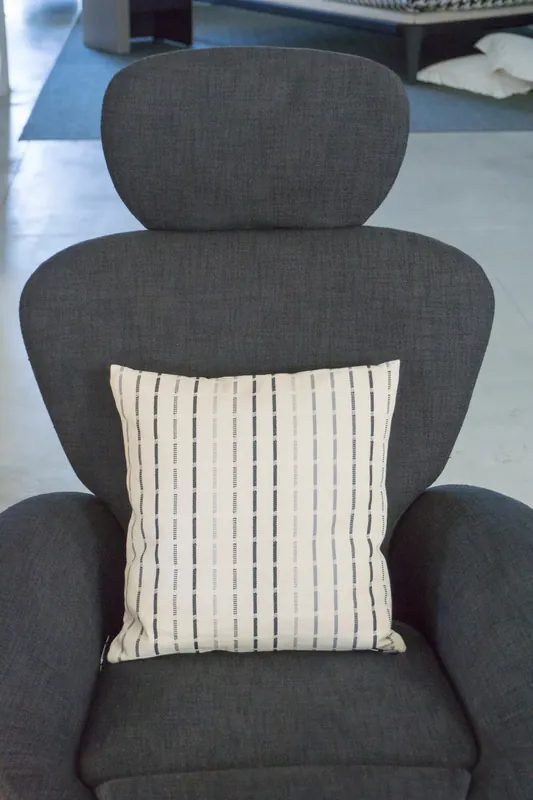
Coughing, sneezing and laughing can hurt in the first days. Holding a pillow or folded towel firmly against your tummy while you do it (called “splinting”) makes it more comfortable. After a vaginal operation, you can press a hand over your pad instead. Your stitches are secure and coughing will not damage them, so do not hold back if you need to clear your chest.[2][3]
Avoid crossing your legs for long
Sitting with your legs crossed for long periods can slow blood flow in the legs at a time when the risk of blood clots is higher than usual. Keep both feet on the floor and do simple ankle exercises while you rest: point and flex your feet, and circle your ankles.[4]
Do you need a special cushion?
Most women do not. The hospital leaflets we reviewed recommend ordinary pillows behind the back or under the knees, not special post-surgery cushions.[2][3] After a vaginal hysterectomy or repair, a soft cushion on the seat can help if you feel sore, but there is no need to buy anything unless it makes you more comfortable.
Getting up and down safely
From a chair: shuffle to the front of the seat, put your feet slightly apart and under you, lean forward a little and push up with your hands on the armrests. Reverse this to sit down, lowering yourself slowly with your arms.
From bed: bend your knees, roll onto your side, let your legs drop over the edge and push yourself up with your elbow and hand. Sit on the edge of the bed for a moment before you stand, as it is normal to feel a little dizzy the first few times.[1][2] If you have a tummy wound, holding a rolled towel against it as you come forward can help.
How long can you sit at a time?
There is no fixed limit, and you do not need to avoid sitting. The bigger risk is staying still for too long. Getting up regularly, walking around the house and gradually walking further each day all help your circulation and lower the risk of blood clots. The Pelvic, Obstetric and Gynaecological Physiotherapy group (POGP) suggests doing a few deep breaths every hour, pumping your feet and ankles every few hours until you are fully mobile, and walking daily, building up the distance gradually.[1]
A practical rule is to stand up and move for a few minutes at least every hour while you are awake. If you work at a desk, build up your sitting time gradually when you return to work, and keep getting up for short breaks. Our week-by-week recovery guide explains when most women go back to work and other activities.
Sitting in the car
You can travel as a passenger when you go home. A small folded towel between the seatbelt and your tummy can make the belt more comfortable. On longer journeys, stop to walk around regularly.
Driving is a different question. NHS advice is usually to wait around four to six weeks, and only drive when you can wear a seatbelt comfortably, do an emergency stop and look over your shoulder without pain. Practise the movements while the car is parked, start with short trips, and check with your car insurer.[1][2]
Sitting on the toilet: avoid straining
Constipation is very common after surgery, partly because of pain medicines and moving less. Straining on the toilet puts pressure on the pelvic floor and on healing tissues, so it is worth getting the position right:[1][4]
- Sit fully on the seat (do not hover).
- Rest your feet on a small stool so your knees are higher than your hips.
- Lean forward with your elbows on your knees and let your tummy relax.
- Breathe calmly and do not hold your breath or push hard.
- After a vaginal operation, gently supporting the area between the vagina and back passage with a pad or folded tissue can feel more comfortable.
Drink plenty of fluids (around 1.5 to 2 litres a day, mostly water) and eat fruit, vegetables and fibre. If you are still constipated or straining, ask your doctor or pharmacist about a stool softener or laxative, especially while you are taking codeine-based painkillers.[1][4]
Pelvic floor exercises after a hysterectomy
Your pelvic floor is the group of muscles that supports the bladder, bowel and, after a hysterectomy, the top of the vagina. Keeping these muscles working well helps with bladder control and pelvic support. Physiotherapy guidance recommends starting gentle exercises soon after surgery.[1][2][3]
When to start
You can begin once your catheter has been removed and you are passing urine normally, even if you have stitches. The exercises should not be painful. Do not do them while you still have a catheter, or if you are struggling to pass urine. Tell your doctor straight away if you have trouble emptying your bladder.[1][2]
How to do them
- Find the muscles. Squeeze as if you are trying to stop yourself passing wind and urine at the same time. You should feel a gentle lift inside the vagina. Keep breathing, and do not clench your buttocks or thighs.
- Long squeezes. Hold the squeeze for a few seconds, then relax fully. Start with what you can manage (for example, 5 seconds, 5 times) and build up towards 10 squeezes held for 10 seconds each, with 10 seconds of rest in between.
- Short squeezes. Then do up to 10 quick, strong squeezes, relaxing fully after each one.
- Repeat at least three times a day. If the muscles tire quickly, do a little and often.
Start lying down or sitting, then progress to doing them standing and while walking. It usually takes around three to five months of regular practice to notice a real improvement, and it is worth carrying on afterwards to keep the benefit.[1]
“The Knack”: squeeze before you strain
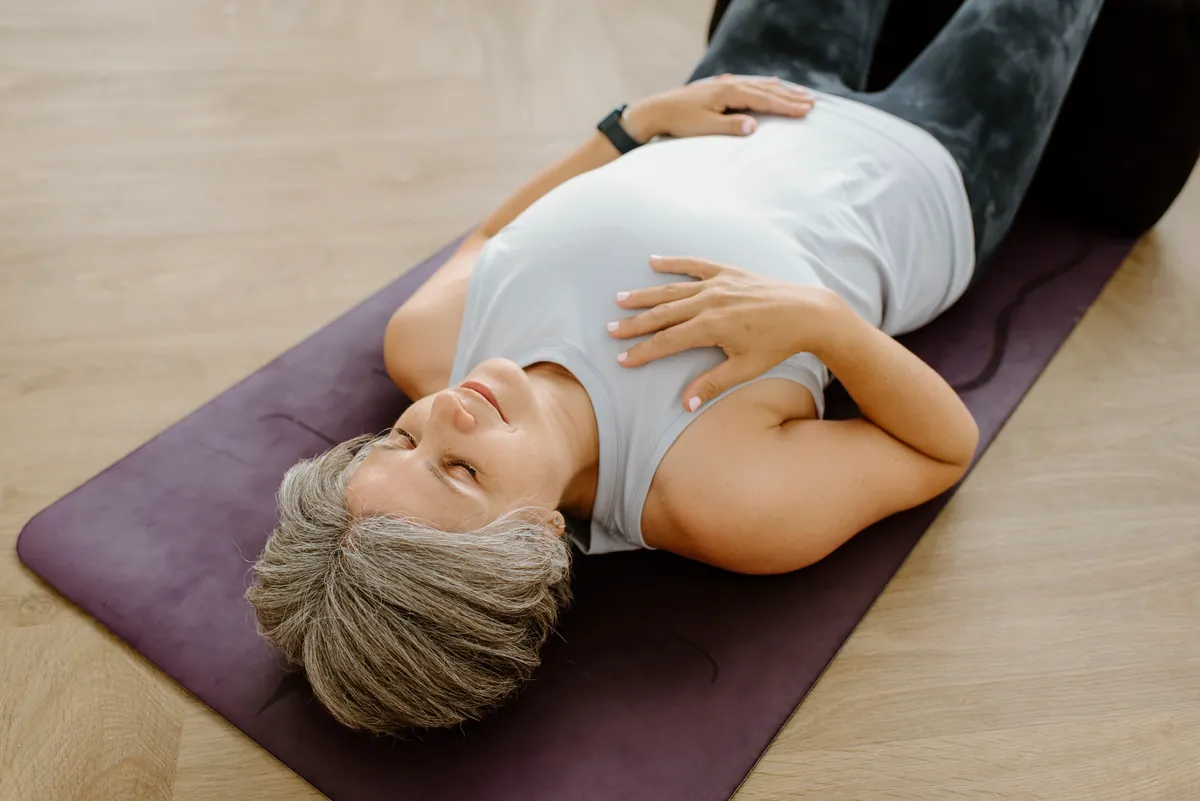
Get into the habit of tightening your pelvic floor just before anything that pushes down on it: coughing, sneezing, laughing, bending or lifting. Physiotherapists call this “the Knack”. It becomes automatic with practice and is useful for life, not just during recovery.[1][3]
If the exercises are difficult, you are not sure you are doing them correctly, or you have leaking or heaviness, ask your doctor to refer you to a specialist pelvic health (women’s health) physiotherapist.
Can a hysterectomy cause prolapse?
Having a hysterectomy is one of several known risk factors for pelvic organ prolapse, along with childbirth, getting older and menopause, being overweight, long-term constipation or coughing, and heavy lifting at work.[9] After a hysterectomy, the type of prolapse that can happen is called vaginal vault prolapse, where the top of the vagina sags down. The bladder or bowel can also bulge into the vaginal walls.
It is not common, and it usually develops over years, not weeks. In a large long-term study from the UK (the Oxford Family Planning Association Study), prolapse needing surgery after hysterectomy occurred at a rate of 3.6 per 1,000 women per year. The cumulative risk was about 1% three years after the hysterectomy and about 5% fifteen years after. Women whose hysterectomy was done because of prolapse had a much higher risk (about 5.5 times) than women who had it for other reasons.[8]
For a fuller explanation of the causes and treatments, read our guide on why prolapse occurs after a hysterectomy.
What actually lowers your risk
No trials have tested whether pelvic floor exercises prevent prolapse in the first place, so nobody can promise that they will.[7] What the evidence and guidelines do support:
- Pelvic floor muscle training improves prolapse symptoms and severity in women who already have a prolapse, according to a Cochrane review. Supervised training for several months gave the clearest results.[7] Keeping these muscles strong is a sensible, low-risk habit.
- Avoiding constipation and straining over the long term.[9]
- Reaching or keeping a healthy weight, if you are overweight.[9]
- Treating a long-term cough (for example, from smoking or asthma that is not well controlled).
- Lifting with good technique: bend your knees, keep the load close to your body, and use the Knack before you lift.
You do not need to be afraid of normal activity
Many women are told never to lift anything heavy again or to stay very still after surgery. The evidence for strict restrictions is weak. When researchers measured pressure inside the abdomen during everyday tasks, a strong cough raised it almost as much as lifting a heavy weight from the floor, and climbing stairs raised it no more than getting up from a chair.[5] A 2025 review of randomized trials in women having prolapse or bladder surgery found that more liberal activity advice gave similar short-term results to standard restrictions, with somewhat better symptom scores.[6]
This does not mean you should lift heavy shopping in week one. Most hospitals still advise avoiding heavy lifting for about six weeks while the wounds heal, then building up gradually: low-impact activities such as swimming, cycling or gentle Pilates from around six to twelve weeks, and high-impact exercise from about three months.[1] It does mean that gentle, everyday movement is good for you, and that sitting, walking and climbing stairs are not risky.
Signs of prolapse to mention to your doctor
See your doctor (it is not an emergency) if, weeks, months or years after your hysterectomy, you notice:[9]
- a feeling of heaviness or dragging in the lower tummy or vagina, often worse at the end of the day
- a feeling like sitting on a small ball, or of something coming down
- a bulge you can see or feel in or at the opening of the vagina
- a feeling that your bladder or bowel does not empty fully, or leaking urine when you cough, sneeze or exercise
- discomfort or numbness during sex
When to get medical help after surgery
Contact your hospital team, your doctor or an urgent care service if you have any of the following during your recovery:[4]
- tummy pain that is getting worse instead of better
- a temperature of 38°C (100.4°F) or higher
- vomiting or being unable to eat
- difficulty passing urine, burning or stinging when you pee, or needing to go much more often
- a painful, red, swollen or hot leg, or pain when putting weight on it (possible blood clot)
- a bad-smelling discharge from the wound or vagina, or heavy vaginal bleeding
Call emergency services if you have chest pain, sudden shortness of breath or cough up blood, as these can be signs of a blood clot in the lungs.
Frequently asked questions
Can sitting damage my internal stitches?
No. Sitting puts very little strain on the stitches at the top of the vagina or in the tummy wall. It may feel uncomfortable, but discomfort is not damage. Change position whenever you need to.
Is it better to lie down than to sit?
Neither is better for healing. What matters most is not staying in one position for hours. A mix of resting (lying or sitting), short walks and gentle exercises is what hospital physiotherapists recommend.[1]
Can I sit cross-legged on the floor?
Low seats and the floor are harder to get up from in the first weeks, and folding deeply at the hips can pull on a tummy wound. Most women find a chair easier until movement feels comfortable again. Avoid sitting with your legs crossed for long periods while you are less active, because of the risk of blood clots.[4]
When will sitting feel normal again?
Many women find sitting comfortable again within a few weeks, usually sooner after laparoscopic or vaginal surgery than after an abdominal operation. Some tiredness and occasional twinges can last longer. Read what recovery often looks like four months after a hysterectomy, and see our hysterectomy FAQ for other common questions. If you are still preparing for your operation, our tips before hysterectomy surgery include setting up a comfortable chair at home, and our guide to partial hysterectomy explains the different types of surgery.
Sources
- Pelvic, Obstetric and Gynaecological Physiotherapy (POGP). Fit following gynaecological surgery: advice and exercise following gynaecological surgery. 2017, updated 2022.
- NHS Borders (Right Decision Service). Physiotherapy advice after abdominal gynaecological surgery.
- Bedfordshire Hospitals NHS Foundation Trust. Exercises that can be carried out after a hysterectomy.
- University Hospital Southampton NHS Foundation Trust. Recovering well after an abdominal hysterectomy (adapted from the Royal College of Obstetricians and Gynaecologists leaflet). 2024.
- Weir LF, Nygaard IE, Wilken J, Brandt D, Janz KF. Postoperative activity restrictions: any evidence? Obstetrics & Gynecology. 2006.
- Postoperative activity restrictions after reconstructive pelvic surgery (systematic review and meta-analysis). 2025.
- Hagen S, Stark D. Conservative prevention and management of pelvic organ prolapse in women. Cochrane Database of Systematic Reviews. 2011.
- Mant J, Painter R, Vessey M. Epidemiology of genital prolapse: observations from the Oxford Family Planning Association Study. British Journal of Obstetrics and Gynaecology. 1997.
- NHS 111 Wales. Pelvic organ prolapse.
This article is for general information and is not a substitute for medical advice. Always follow the instructions of your surgeon and care team, and contact a healthcare professional if you have any concerns about your recovery.