Salpingectomy: Why the Fallopian Tubes Are Removed and What Happens to Your Ovaries
A salpingectomy is surgery to remove one or both fallopian tubes, the thin tubes that carry an egg from the ovary to the uterus. The ovaries stay where they are and keep making hormones, so a salpingectomy on its own does not cause menopause.[1] It is done for several reasons: to treat an ectopic pregnancy or a damaged tube, as a permanent form of contraception, and, more and more often, during a hysterectomy to lower the risk of ovarian cancer. This guide explains what is removed, why, what the evidence says about your ovaries and hormones, and what recovery is like.
What a salpingectomy removes
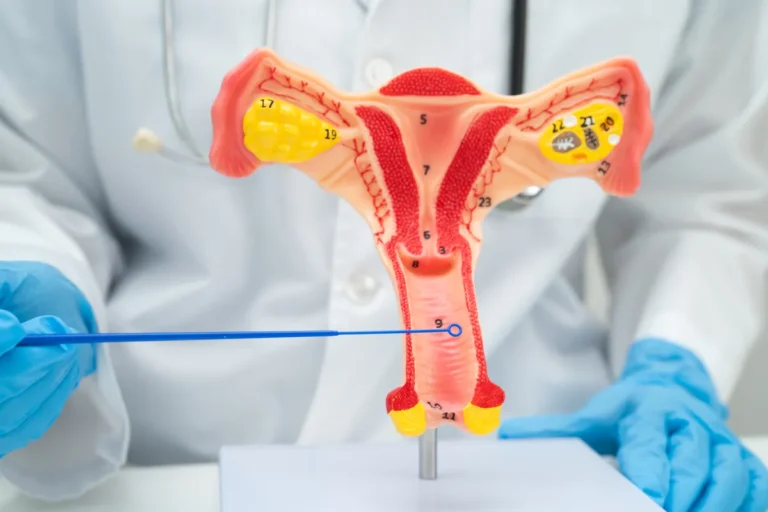
Each fallopian tube runs from the top corner of the uterus towards an ovary. Its far end opens into finger-like fringes (the fimbriae) that catch the egg when it is released. In a salpingectomy the surgeon removes the tube; the ovaries and, unless a hysterectomy is done at the same time, the uterus are left in place.[1]
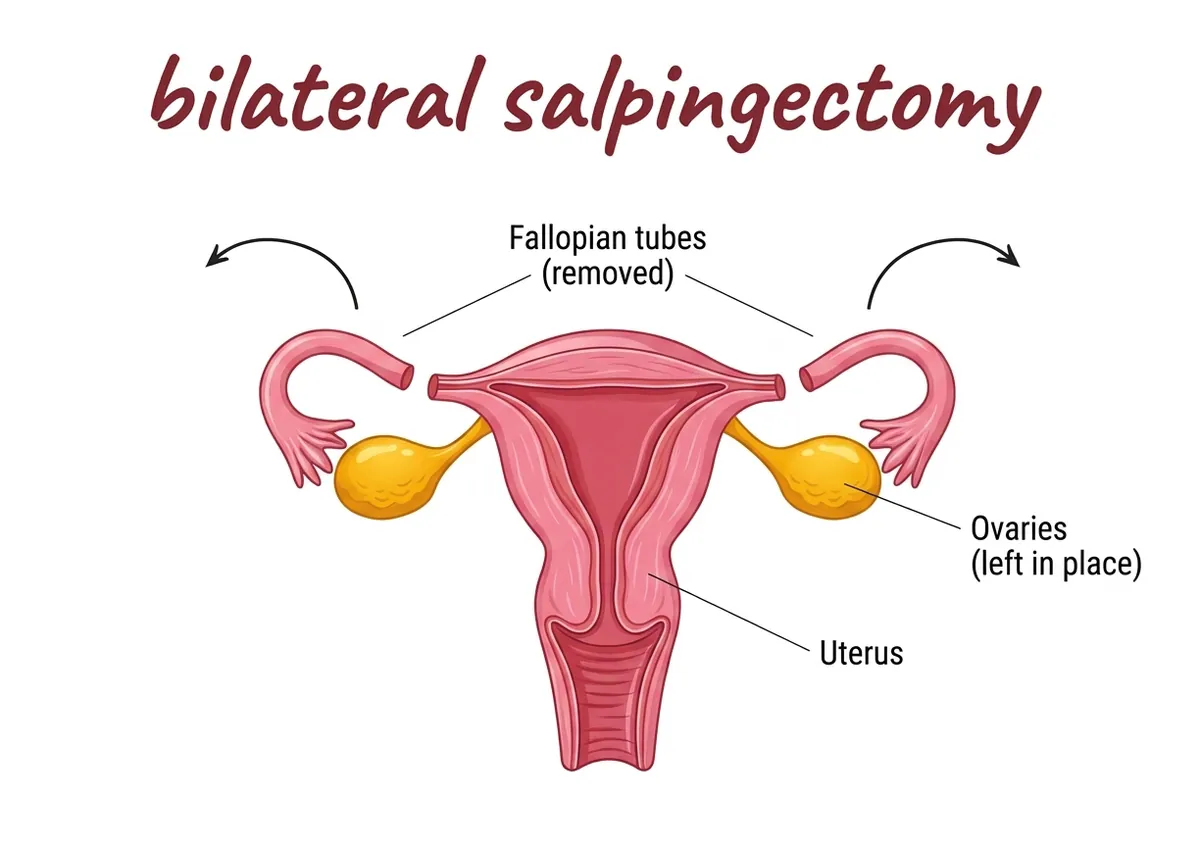
- Unilateral salpingectomy: one tube (or part of one) is removed. You can still get pregnant naturally if the other tube works.[1]
- Bilateral salpingectomy: both tubes are removed completely. Natural pregnancy is no longer possible, although IVF can still work if you have a uterus.[1]
Salpingectomy, oophorectomy and hysterectomy: the terms on your consent form
These words are easy to mix up, and the difference matters for your hormones:
- Salpingectomy: removal of the fallopian tubes only. The ovaries keep working.
- Oophorectomy: removal of the ovaries. If both are removed before menopause, menopause starts straight away.
- Salpingo-oophorectomy: removal of a tube and its ovary together. “Bilateral salpingo-oophorectomy” (often written BSO) means both tubes and both ovaries.
- Hysterectomy: removal of the uterus. On its own it says nothing about the tubes or ovaries; our guide to partial vs total hysterectomy explains the different types.
So “total hysterectomy with bilateral salpingectomy” means the uterus, cervix and both tubes are removed but both ovaries are kept. If you are not sure what your surgeon is planning, ask them to say plainly whether your ovaries will stay.
Why the fallopian tubes are removed
Ectopic pregnancy
An ectopic pregnancy grows outside the uterus, usually in a fallopian tube, and cannot continue. When surgery is needed, the NHS explains that the whole affected tube is usually removed if the other tube looks healthy; if it does not, the surgeon may try to remove only the pregnancy and keep the tube. Removing the affected tube is not thought to reduce your chances of becoming pregnant again when the other tube is healthy.[8] A ruptured tube is an emergency and may need open surgery to stop the bleeding.[8]
Blocked or damaged tubes before IVF
A tube that is blocked at the end can fill with fluid (a hydrosalpinx). That fluid can leak into the uterus and make an embryo less likely to implant. A Cochrane review of randomised trials found that removing tubes with a hydrosalpinx by keyhole surgery before IVF roughly doubled the odds of an ongoing pregnancy or live birth (odds ratio 2.13), without raising the rate of ectopic pregnancy or miscarriage.[9] Infection or endometriosis that has badly damaged a tube can be other reasons to remove it.[1]
Permanent contraception
Removing both tubes is a form of sterilization. In its 2026 clinical practice update, the American College of Obstetricians and Gynecologists (ACOG) calls complete bilateral salpingectomy the preferred tubal procedure for people who want permanent contraception, after a shared discussion of the options.[2] Unlike some forms of tubal ligation, it cannot be reversed: once the tubes are gone, IVF is the only route to pregnancy. Our comparison of tubal ligation vs hysterectomy covers sterilization choices in more detail.
During a hysterectomy or other pelvic surgery (opportunistic salpingectomy)
When the tubes are removed during an operation you are already having, mainly to lower your future cancer risk, it is called an opportunistic salpingectomy. After a hysterectomy the tubes have no function, so removing them takes away a possible source of cancer without changing how your body works. This is now the most common reason the tubes are removed during a hysterectomy, and the next section explains why.
Salpingectomy and ovarian cancer risk
For a long time, ovarian cancer was thought to start in the ovary itself. Research over the past two decades has shown that many cases of high-grade serous carcinoma, the most common and most dangerous type, actually begin in the fimbriae at the end of the fallopian tube and spread to the ovary later.[3] Ovarian cancer is hard to find early, and there is still no reliable screening test, so removing the tubes is one of the few ways to lower the risk.
What the studies show so far:
- Sweden: a nationwide study of more than 250,000 women who had benign gynecologic surgery found that those who had both tubes removed had about a third of the ovarian cancer risk of the general population (hazard ratio 0.35). Removing one tube was linked to a smaller reduction (hazard ratio 0.71).[4]
- British Columbia, Canada: the province began recommending opportunistic salpingectomy in 2010. A 2026 study compared more than 40,000 women who had their tubes removed during a hysterectomy or instead of a tubal ligation with more than 45,000 women who had a hysterectomy alone or a tubal ligation. Serous ovarian cancer was about 78% less common after salpingectomy (hazard ratio 0.22), although the number of cancers was small.[5]
These are observational studies, not randomised trials, and most of the women in the Canadian study have not yet reached the age when ovarian cancer is most common, so the exact size of the benefit is still being worked out.[5] Even so, the evidence was strong enough for ACOG to strengthen its advice in August 2026: it now says gynecologists should routinely perform bilateral salpingectomy at the time of hysterectomy, and should offer it during other gynecologic operations that enter the abdomen in people who do not want future pregnancies.[2] Its earlier 2019 guidance had recommended that surgeons discuss it with patients.[3]
What it does not do
- It does not remove all risk. Some types of ovarian cancer start in the ovary, and the ovaries are still there. Bloating that does not go away, pelvic or abdominal pain, feeling full quickly or needing to pass urine more often are still worth reporting to your doctor if they persist.
- It is not a substitute for ovary removal in high-risk people. If you carry a BRCA1 or BRCA2 gene change or have a strong family history of ovarian cancer, the standard advice is still to remove the tubes and ovaries together at the recommended age. Removing the tubes first and the ovaries later is being studied, and ACOG advises that it be done within clinical trials for now.[3]
Will it affect my ovaries, hormones or menopause?
This is the most common worry, because the tubes and ovaries share part of their blood supply. The research so far is reassuring:
- Ovarian reserve: a meta-analysis of studies measuring anti-Müllerian hormone (AMH), a blood marker of how many eggs remain, found no significant drop after salpingectomy in the short term. The authors note that the long-term effect is less certain.[6]
- Timing of menopause: a British Columbia study of more than 41,000 women aged 50 or under found that those who had a hysterectomy with salpingectomy were no more likely to see a doctor about menopause symptoms, or to see one sooner, than those who had a hysterectomy alone (hazard ratio 0.98). The same was true for salpingectomy compared with tubal ligation.[7]
Larger long-term studies are still running. In Sweden, the HOPPSA trial is randomly assigning women having a hysterectomy to have their tubes removed or kept, and will follow complications, hormone-related symptoms and ovarian cancer for many years.[10] Until those results arrive, the best summary is that no meaningful effect on ovarian function has been found.
In practical terms:
- If you still have your uterus, your periods continue after a salpingectomy and you go through menopause at your natural time.[1]
- If the salpingectomy is done with a hysterectomy, periods stop because the uterus is gone, but your ovaries keep working until natural menopause. Our article on menopause after a hysterectomy with ovaries intact explains how to recognise it without periods, and hysterectomy and hormones covers what changes and what does not.
Fertility after a salpingectomy
- One tube removed: the ovary on that side still releases eggs, and the remaining tube can often pick them up. Many people get pregnant naturally afterwards.[1][8]
- Both tubes removed: eggs can no longer meet sperm, so natural pregnancy is not possible. Because the ovaries and uterus are kept, IVF is still an option: eggs are collected directly from the ovaries and the embryo is placed in the uterus.[1]
- Tubes removed with a hysterectomy: pregnancy is no longer possible because there is no uterus. Your own eggs could still be used with a gestational carrier; see IVF after a hysterectomy.
If you might want children in the future, say so before any pelvic surgery. Salpingectomy for cancer prevention is offered only to people who have finished having children.[2]
How the surgery is done
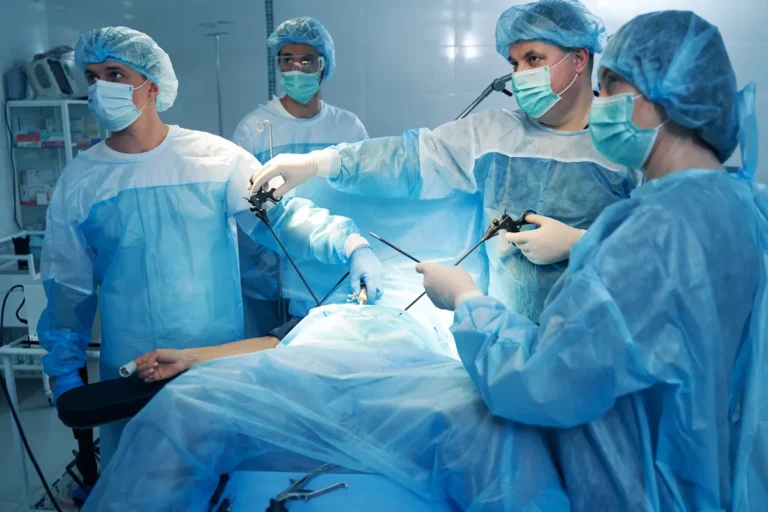
Most salpingectomies are done by laparoscopy (keyhole surgery) under general anesthesia. The abdomen is filled with gas, a camera goes in through a small cut near the belly button, and instruments go in through one or two other small cuts. Open surgery through a larger incision is kept for emergencies such as a ruptured ectopic pregnancy, or when other factors make keyhole surgery unsuitable.[1][8] A laparoscopic salpingectomy on its own usually takes an hour or less.[1] If you want to know what the small cuts usually look like as they heal, see our page on hysterectomy scars and incisions.
When the tubes are removed during a hysterectomy, it is done through the same cuts. According to the evidence reviewed by ACOG, it adds about 12 to 16 minutes to the operation and does not significantly increase complications.[2] In a vaginal hysterectomy the tubes can be harder to reach, and ACOG now asks surgeons to take this into account when discussing which approach to use.[2]
Recovery
- After a laparoscopic salpingectomy: many people go home the same day. Most feel better within a few days and are back to their usual routine within about two weeks.[1] Pain in the shoulder tip for a day or two is common after keyhole surgery: it comes from the gas used to inflate the abdomen and fades as the gas is absorbed.
- After open surgery: you will usually stay in hospital at least one night, and full recovery takes about four to six weeks.[1][8]
- Activity: avoid strenuous exercise, heavy lifting and straining for two to six weeks depending on the type of surgery, and follow your surgeon’s advice.[1] Gentle walking from the first days helps.
If the tubes were removed during a hysterectomy, recovery is the recovery from the hysterectomy itself; our week-by-week hysterectomy recovery guide explains what to expect.
Risks and warning signs
As with any operation, the main risks are bleeding, infection, blood clots, a reaction to the anesthetic and, rarely, injury to nearby organs such as the bowel or bladder.[1] Contact your surgical team or seek urgent care if you have:[1]
- Fever or chills.
- Redness, swelling, or fluid or pus coming from a wound.
- Pelvic or abdominal pain that is getting worse rather than better.
- Pain or swelling in one leg, or sudden shortness of breath or chest pain (call emergency services).
- Pain or burning when you pass urine.
- Early pregnancy symptoms after one tube was removed, since an early scan can check where the pregnancy is.
Questions to ask your surgeon
- Will you remove one tube or both, and will you remove all of each tube, including the fimbriae?
- Will my ovaries definitely stay? Under what circumstances would you remove one?
- If I am having a hysterectomy, do you plan to remove my tubes, and if not, why not?
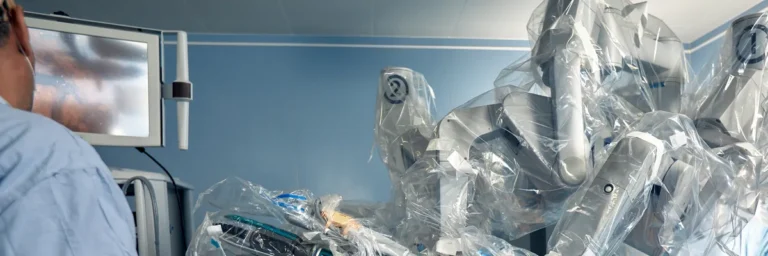
- Does the route of surgery (laparoscopic, vaginal, robotic or open) affect whether my tubes can be removed?
- Given my family history, should I see a genetic counselor before surgery?
- How long should I wait before lifting, exercising, driving or having sex?
Our checklist on how to prepare for a hysterectomy has more questions for the pre-operative visit.
Frequently asked questions
Can I still get ovarian cysts after a salpingectomy?
Yes. Cysts form on the ovary, and the ovaries are kept, so cysts are still possible. Most are harmless and go away on their own; our article on ovarian cysts after a hysterectomy explains when to worry.
I already had a hysterectomy and kept my tubes. Should I have them removed now?
Usually not as a separate operation. The guidance on opportunistic salpingectomy applies to surgery you are already having, where removing the tubes adds very little risk.[2] A separate operation carries its own risks, so for most people at average risk it is not recommended. If you have a strong family history of ovarian or breast cancer, ask about genetic counseling, because the options for high-risk people are different.[3]
Does a salpingectomy change sex or libido?
The tubes play no part in arousal or orgasm, and the ovaries keep making their hormones, so a salpingectomy on its own is not expected to change your sex life. Most surgeons suggest waiting until the wounds have healed and you feel comfortable; ask your surgical team when it is safe for you.
Can the tubes grow back?
No. Once a tube is removed it does not grow back, which is why a bilateral salpingectomy is a permanent form of contraception.[1][2]
Sources
- Cleveland Clinic. Salpingectomy. my.clevelandclinic.org
- American College of Obstetricians and Gynecologists. Opportunistic salpingectomy as a strategy for epithelial ovarian cancer prevention: clinical practice update. Obstetrics & Gynecology. 2026. Summary in Contemporary OB/GYN: contemporaryobgyn.net
- American College of Obstetricians and Gynecologists. Committee Opinion No. 774: Opportunistic Salpingectomy as a Strategy for Epithelial Ovarian Cancer Prevention. Obstetrics & Gynecology. 2019. pubmed.ncbi.nlm.nih.gov
- Falconer H, et al. Ovarian cancer risk after salpingectomy: a nationwide population-based study. Journal of the National Cancer Institute. 2015. pubmed.ncbi.nlm.nih.gov
- Sowamber R, et al. Serous Ovarian Cancer Following Opportunistic Bilateral Salpingectomy. JAMA Network Open. 2026;9(2):e2557267. jamanetwork.com
- Mohamed AA, et al. Ovarian reserve after salpingectomy: a systematic review and meta-analysis. Acta Obstetricia et Gynecologica Scandinavica. 2017;96(7):795–803. nottingham-repository.worktribe.com
- Hanley GE, et al. Examining indicators of early menopause following opportunistic salpingectomy. American Journal of Obstetrics and Gynecology. 2020;223(2). doi.org
- NHS. Ectopic pregnancy: treatment. nhs.uk
- Cochrane. Surgical treatment for tubal disease in women due to undergo in vitro fertilisation. Cochrane Database of Systematic Reviews. doi.org
- Hysterectomy and opportunistic salpingectomy (HOPPSA): study protocol for a register-based randomized controlled trial. Trials. 2019. ncbi.nlm.nih.gov
This article is for general information and is not a substitute for medical advice. Always discuss your own situation with your gynecologist or doctor, and contact them or emergency services if you are worried about any symptom.