Keep or Remove Your Ovaries During a Hysterectomy? Benefits, Risks and How to Decide
A hysterectomy removes the uterus. It does not automatically remove the ovaries, but many women are asked before surgery whether they want their ovaries taken out at the same time, and some only find out afterwards that they were. The choice matters: if both ovaries are removed before menopause, menopause starts straight away, and the research on long-term health points in different directions depending on your age, your genes and whether you take estrogen afterwards.[1] This guide explains what the ovaries do, what happens if you keep or remove them, what the studies show, when removal is usually recommended, and how to make sure your wishes are clear before the operation.
This guide explains general information about keeping or removing the ovaries during a hysterectomy. It cannot account for your own age, family history, genetic test results or health history, so please use it to prepare questions for your gynecologist or surgeon, not to make decisions on your own.
What your ovaries do
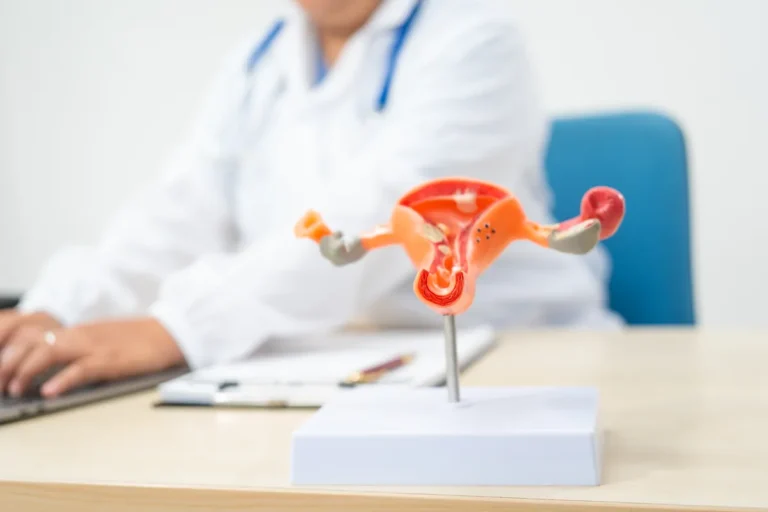
The two ovaries sit on either side of the uterus. Before menopause they release eggs and make most of your estrogen and progesterone, as well as some testosterone. The NHS notes that these hormones help protect your bones and contribute to sexual desire.[1] At menopause (around 51 on average) the ovaries gradually stop releasing eggs and making most of their estrogen.[1] Our guide to hysterectomy and hormones explains these changes in more detail.
The words on your consent form
- Hysterectomy: removal of the uterus (and usually the cervix). On its own it says nothing about the ovaries. Our guide to partial vs total hysterectomy explains the different types.
- Oophorectomy: removal of an ovary. “Unilateral” means one; “bilateral” means both.
- Salpingo-oophorectomy: removal of a fallopian tube together with its ovary. BSO (bilateral salpingo-oophorectomy) means both tubes and both ovaries.
- Salpingectomy: removal of the fallopian tubes only; the ovaries stay. See our guide to salpingectomy.
So “total hysterectomy with BSO” means the uterus, cervix, both tubes and both ovaries are removed, while “total hysterectomy with bilateral salpingectomy” means the ovaries are kept. If the plan is not written in plain words, ask your surgeon to tell you exactly which organs will stay.
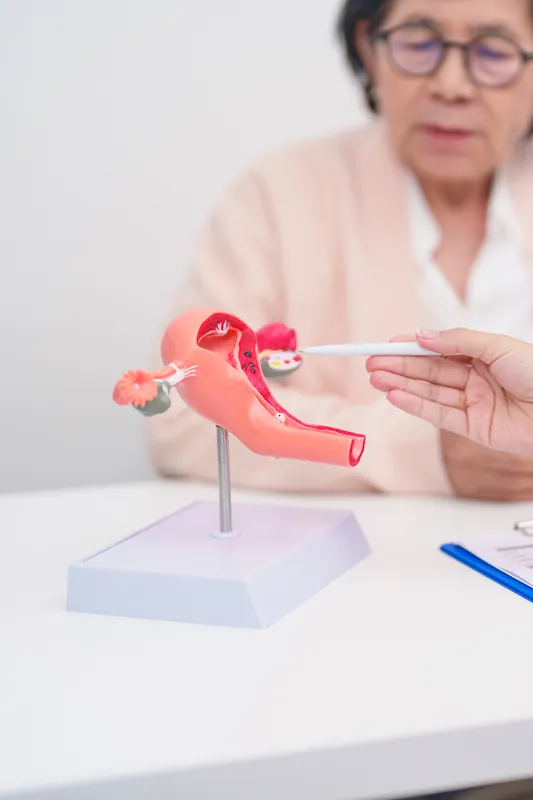
If you keep your ovaries
Your periods stop because the uterus is gone, but your ovaries keep working and you go through menopause in your own time, usually with the same symptoms as anyone else. Because there are no periods to watch, it can be harder to tell when it starts; our guide to menopause after hysterectomy with ovaries intact explains the signs.
Two things are worth knowing:
- Menopause may come a little earlier. In a US study of women aged 30 to 47, those who had a hysterectomy but kept their ovaries were nearly twice as likely to reach ovarian failure (very high FSH levels) during up to five years of follow-up than similar women without a hysterectomy: 14.8% compared with 8.0% after four years. The risk was higher in women who kept only one ovary. It is not clear whether the surgery itself or the condition that led to it is the cause.[11]
- A later operation on the ovaries is possible but not common. In a Minnesota study of almost 5,000 women who kept their ovaries at hysterectomy, 9.2% had an ovary removed within 30 years, compared with 7.3% of similar women who never had a hysterectomy.[12] Reasons include cysts, pain or a suspicious mass; see our guides to ovarian cysts after hysterectomy and ovary pain after hysterectomy.
If both ovaries are removed
If you have not yet reached menopause, removing both ovaries causes menopause immediately, whatever your age.[1] This is called surgical menopause. Symptoms such as hot flashes, night sweats, poor sleep and vaginal dryness can start within days and may feel stronger than in a natural menopause, because the hormone drop is sudden rather than gradual. Our guides to surgical menopause and hot flashes and insomnia after hysterectomy cover what to expect and what helps.
Hormone therapy can replace much of what the ovaries made. The NHS advises that if both ovaries are removed before menopause, hormone replacement therapy (HRT) is usually continued until around the normal age of menopause, about 51, unless there is a reason you cannot take it, such as some hormone-sensitive breast cancers.[1] The Menopause Society (formerly NAMS) also states that for women under 60 or within ten years of menopause who have no contraindications, the benefits of hormone therapy generally outweigh the risks for treating symptoms and preventing bone loss.[18] After a hysterectomy you can usually take estrogen on its own, without a progestogen, because there is no uterine lining to protect.
If both ovaries are removed after menopause, there is no sudden change in periods or hot flashes, because the ovaries had already stopped making most of their estrogen.
What the research shows about long-term health
There are no completed randomized trials comparing hysterectomy with and without removal of the ovaries. A Cochrane review found only one small pilot trial, whose results were never published, so all the evidence comes from large observational studies.[10] These follow women for decades, but they cannot fully prove cause and effect: women who had their ovaries removed may have differed in other ways. With that caution, the results are fairly consistent.
The benefit: much lower ovarian and breast cancer risk
For a woman at average risk, the lifetime chance of developing ovarian cancer is about 1 in 91, according to the American Cancer Society.[13] Removing the ovaries almost eliminates it. In the Nurses’ Health Study, which followed about 29,000 women for 24 years after a hysterectomy for a benign condition, ovarian cancer was 96% less common in women whose ovaries were removed, but because it is rare, about 220 oophorectomies were needed to prevent one case. Breast cancer was also about 25% less common.[3]
The cost: heart disease and overall survival, especially before 50
- Nurses’ Health Study: after 28 years, 16.8% of women whose ovaries were removed had died, compared with 13.3% of those who kept them. Removing the ovaries was linked to more coronary heart disease and lung cancer, and at no age was it linked to living longer. The extra risk of death was clearest in women under 50 at surgery who never took estrogen.[3][4]
- England: a national study of about 114,000 women aged 35 to 45 who had a hysterectomy for a benign condition found that those who kept at least one ovary had lower death rates and fewer hospital admissions for heart disease and cancer over up to ten years.[5]
- Mayo Clinic cohort (Minnesota): removing both ovaries before age 45 for a non-cancer reason was linked to higher overall and cardiovascular mortality, mainly in women who did not take estrogen until at least 45.[6][8] Removing one or both ovaries before menopause was also linked to a higher later risk of memory problems or dementia, and the younger the woman at surgery, the higher the risk.[7]
A systematic review by the Society of Gynecologic Surgeons pulled these studies together. It concluded that removing both ovaries effectively removes the risk of ovarian cancer and of a later ovarian operation, but can harm other aspects of health, especially in women younger than 45.[9] In several of these studies the extra risk was much smaller or not seen in women who took estrogen after surgery, which is one reason HRT is usually advised after an early surgical menopause.[6][8][9]
What about sex drive?
Surgical menopause can cause vaginal dryness and a lower sex drive, and the ovarian hormones contribute to desire.[1] But the evidence on long-term sexual function is mixed: a US survey of more than 1,300 women aged 57 to 85 found no significant difference in sexual thoughts between those who had had both ovaries removed and those who had not.[19] Vaginal dryness responds well to treatment; see our guide to sex after hysterectomy.
The middle option: keep the ovaries, remove the tubes
Many of the most common and serious ovarian cancers are now thought to start in the far end of the fallopian tube. For this reason, the American College of Obstetricians and Gynecologists (ACOG) advises that for women at average risk who are having a hysterectomy, removing the tubes while keeping the ovaries can be offered as a way to lower ovarian cancer risk without causing menopause.[16] This is called an opportunistic salpingectomy. Our salpingectomy guide explains the evidence on how much it lowers cancer risk and what it means for your hormones.
When removing the ovaries is usually recommended
Guidelines generally favor keeping healthy ovaries in women who have not reached menopause and are not at high genetic risk of ovarian cancer.[1][2] NICE in the UK, quoted by the NHS, advises that the ovaries should only be removed if there is a significant risk of related disease.[1] Removal is more often recommended in these situations:
A high inherited risk (BRCA1, BRCA2 and other genes)
The National Cancer Institute estimates that about 39% to 58% of women with a harmful BRCA1 variant and 13% to 29% of those with a BRCA2 variant will develop ovarian cancer during their lifetime, compared with about 1.1% in the general population.[14] For these women, risk-reducing removal of the tubes and ovaries is the most effective way to lower that risk. ACOG advises that the timing can be tailored to the gene, family history and plans for children; it is typically recommended around age 35 to 40 for BRCA1 carriers, while BRCA2 carriers may consider waiting until 40 to 45.[15] Other inherited gene changes can also raise ovarian cancer risk.[15] If close relatives have had ovarian or breast cancer, ask about genetic counseling before you decide, ideally well before the operation.[1][15]
Disease in the ovaries themselves
A mass that might be cancer, a large or repeatedly returning cyst, an abscess or a twisted ovary that cannot be saved can all be reasons to remove one or both ovaries. Removing one diseased ovary and keeping a healthy one is often possible.
Endometriosis
Because endometriosis is fed by estrogen, removing the ovaries was once routine. A large Canadian study of about 4,500 women aged 19 to 50 who had a hysterectomy for endometriosis found that those who kept both ovaries were more likely to need another operation (13% compared with 5%), mostly to remove an ovary later. But pain-related doctor visits and opioid use were very similar whether or not the ovaries had been removed, and about 40% of women who had both ovaries removed did not fill a prescription for HRT. The authors concluded that keeping the ovaries should be strongly considered.[17] See our guide to hysterectomy for endometriosis.
If you are already past menopause
This is where advice differs most. ACOG’s guidance on elective oophorectomy says removal of the ovaries should be considered for postmenopausal women because of their ovarian cancer risk, and the NHS says it may be recommended if you are near or past menopause.[1][2] On the other hand, the long-term Nurses’ Health Study found that at no age was removing the ovaries linked to living longer.[4] If you are in your fifties or sixties and at average risk, it is reasonable to ask your surgeon to explain why they suggest removing or keeping your ovaries, and whether removing only the tubes would be an option.
How to avoid a surprise in the operating room
Some women wake up to find their ovaries were removed when they expected to keep them. This can happen if the plan was unclear or if the surgeon found something unexpected. The NHS advises telling your surgeon before the operation if you want to keep your ovaries, and notes that you may still be asked to consent to their removal in case an abnormality is found during surgery.[1] Read the consent form carefully and ask for anything unclear to be written in plain words.

Questions to ask your surgeon
- Do you plan to remove my ovaries, my tubes, both or neither? Why?
- Given my age and family history, what are the benefits and risks for me of keeping or removing them?
- Should I have genetic counseling or testing before deciding?
- Could you remove only the fallopian tubes and keep my ovaries?
- If you find something unexpected on an ovary during surgery, what will you do? Can we agree on that in writing?
- If my ovaries are removed, will I be offered HRT, for how long, and what if I cannot take estrogen?
- If I keep my ovaries, what symptoms should make me contact you later?
Our guide on how to prepare for a hysterectomy has more questions and a checklist for the weeks before surgery.
The bottom line
- A hysterectomy does not have to include removing the ovaries.
- Removing both ovaries almost eliminates ovarian cancer risk, but before menopause it causes immediate menopause and, in large observational studies, has been linked to more heart disease, dementia and early death, mainly in women under 45 to 50 who do not take estrogen.
- For women at average risk who have not reached menopause, guidelines generally favor keeping healthy ovaries; removing the tubes alone is a common middle option.
- A strong family history or a BRCA variant changes the balance: ask for genetic counseling.
- Whatever you decide, make sure it is written clearly on your consent form.
Sources
- NHS. Hysterectomy: considerations. nhs.uk
- American College of Obstetricians and Gynecologists. ACOG Practice Bulletin No. 89: Elective and risk-reducing salpingo-oophorectomy. Obstetrics & Gynecology. 2008;111(1):231–241. pubmed.ncbi.nlm.nih.gov
- Parker WH, et al. Ovarian conservation at the time of hysterectomy and long-term health outcomes in the Nurses’ Health Study. Obstetrics & Gynecology. 2009;113(5):1027–1037. pubmed.ncbi.nlm.nih.gov
- Parker WH, et al. Long-term mortality associated with oophorectomy compared with ovarian conservation in the Nurses’ Health Study. Obstetrics & Gynecology. 2013;121(4):709–716. pubmed.ncbi.nlm.nih.gov
- Mytton J, et al. Removal of all ovarian tissue versus conserving ovarian tissue at time of hysterectomy in premenopausal patients with benign disease: study using routine data and data linkage. BMJ. 2017;356:j372. pubmed.ncbi.nlm.nih.gov
- Rocca WA, et al. Survival patterns after oophorectomy in premenopausal women: a population-based cohort study. Lancet Oncology. 2006;7(10):821–828. pubmed.ncbi.nlm.nih.gov
- Rocca WA, et al. Increased risk of cognitive impairment or dementia in women who underwent oophorectomy before menopause. Neurology. 2007;69(11):1074–1083. pubmed.ncbi.nlm.nih.gov
- Rivera CM, et al. Increased cardiovascular mortality after early bilateral oophorectomy. Menopause. 2009;16(1):15–23. pubmed.ncbi.nlm.nih.gov
- Evans EC, et al. Salpingo-oophorectomy at the time of benign hysterectomy: a systematic review. Obstetrics & Gynecology. 2016;128(3):476–485. pubmed.ncbi.nlm.nih.gov
- Orozco LJ, et al. Hysterectomy versus hysterectomy plus oophorectomy for premenopausal women. Cochrane Database of Systematic Reviews. 2014;(7):CD005638. pubmed.ncbi.nlm.nih.gov
- Moorman PG, et al. Effect of hysterectomy with ovarian preservation on ovarian function. Obstetrics & Gynecology. 2011;118(6):1271–1279. pubmed.ncbi.nlm.nih.gov
- Casiano ER, et al. Risk of oophorectomy after hysterectomy. Obstetrics & Gynecology. 2013;121(5):1069–1074. pubmed.ncbi.nlm.nih.gov
- American Cancer Society. Key statistics for ovarian cancer. cancer.org
- National Cancer Institute. BRCA gene changes: cancer risk and genetic testing. cancer.gov
- American College of Obstetricians and Gynecologists. Practice Bulletin No. 182: Hereditary breast and ovarian cancer syndrome. Obstetrics & Gynecology. 2017;130(3):e110–e126. pubmed.ncbi.nlm.nih.gov
- American College of Obstetricians and Gynecologists. Committee Opinion No. 774: Opportunistic salpingectomy as a strategy for epithelial ovarian cancer prevention. Obstetrics & Gynecology. 2019. pubmed.ncbi.nlm.nih.gov
- Long AJ, et al. Reoperation and pain-related outcomes after hysterectomy for endometriosis by oophorectomy status. American Journal of Obstetrics and Gynecology. 2023;228(1):57.e1–57.e18. pubmed.ncbi.nlm.nih.gov
- The 2022 hormone therapy position statement of The North American Menopause Society. Menopause. 2022;29(7):767–794. pubmed.ncbi.nlm.nih.gov
- Erekson EA, et al. Sexual function in older women after oophorectomy. Obstetrics & Gynecology. 2012;120(4):833–842. pubmed.ncbi.nlm.nih.gov
Important: This article is for general information only. It is not medical advice or a treatment recommendation, and it cannot take into account your age, family history, genetic test results or overall health. Decisions about keeping or removing your ovaries should always be made with your gynecologist or surgeon, and, if you may have an inherited cancer risk, a genetic counselor, who know your full situation. If you notice new or worsening symptoms, contact your doctor promptly, or call 911 in an emergency. PartialHysterectomy.net is an independent informational website and is not affiliated with any hospital, doctor or medical organization.