Supracervical Hysterectomy: Life With Your Cervix Afterward (Bleeding, Pap Tests and Later Problems)
A supracervical hysterectomy removes the upper part of the uterus and leaves the cervix in place. It is also called a subtotal or partial hysterectomy. If you are about to have one, or you have already had one, the cervix that stays behind (doctors often call it the “cervical stump”) is still a living part of your body: it can bleed a little, it makes some discharge, it still needs screening, and once in a while it needs attention years later. This guide explains what keeping your cervix means in practice, what the research shows about each of these issues, and which symptoms are worth a call to your doctor.
If you are still deciding between keeping or removing your cervix, start with our comparison of partial vs total hysterectomy, which covers the pros and cons of each choice. This article focuses on life afterwards.
The short answer
- Light monthly bleeding is possible. Depending on the study and the surgical technique, roughly 2 to 19 women in 100 have some cyclical spotting afterwards, usually very light.[6][7][8]
- You still need cervical cancer screening on the normal schedule for your age, because the cervix can still develop precancer or cancer.[2][9]
- Sex, bladder and bowel function were similar after supracervical and total hysterectomy in randomized trials.[1][14]
- A small number of women later need the cervix removed, most often because of bleeding, prolapse, pain or abnormal screening results. Younger women and women with endometriosis are more likely to need this.[16][17]
- Bleeding after menopause always needs checking, and if you take HRT, the person prescribing it should know you still have a cervix.[11][12]
What stays behind after a supracervical hysterectomy
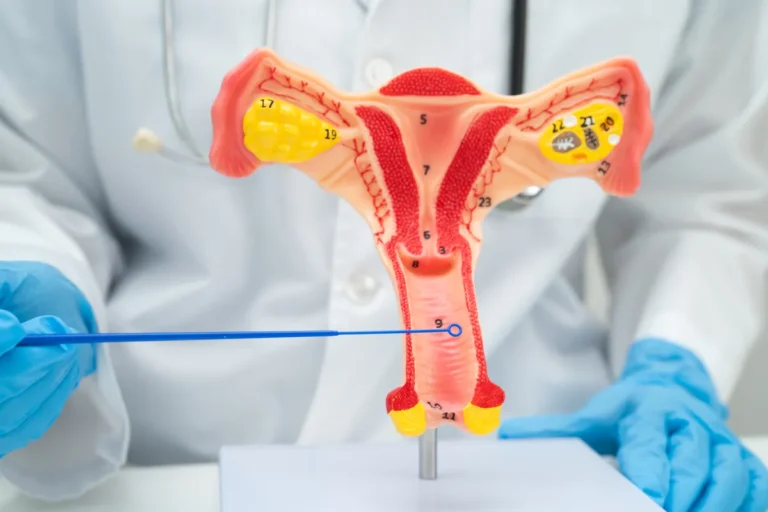
The cervix is the narrow lower part of the uterus, about 2 to 3 cm (around an inch) long, that opens into the top of the vagina. In a supracervical hysterectomy the surgeon separates the body of the uterus from the cervix and removes only the body. The cervix stays attached to the top of the vagina, so the vagina itself is not opened and there is no vaginal cuff to heal. The cervical canal is lined with glands that make mucus, which is part of normal vaginal moisture.[3]
Whether your ovaries and fallopian tubes were removed is a separate question. A supracervical hysterectomy can be done with or without removing them, so check your operation notes if you are unsure. Our guide to partial hysterectomy explains the operation itself and the terms you may see on your paperwork.

How the uterus comes out
Because the vagina is not opened, a supracervical hysterectomy is done by keyhole (laparoscopic or robotic) or open surgery, never through the vagina. In keyhole surgery the uterus usually has to be cut into smaller pieces to come out through a small incision, which is called morcellation. All tissue is sent to the lab. In a German series of 10,731 laparoscopic supracervical hysterectomies, an unsuspected cancer was found in 0.13% of uteri (about 1 in 770).[4] It is reasonable to ask your surgeon how the uterus will be removed and when you will get the pathology results. Our partial vs total guide explains the safety advice about morcellation.
Recovery: what is different when the cervix stays
Recovery depends mostly on the route of surgery (keyhole or open) and on your general health, not on whether the cervix was kept. A Cochrane review of nine randomized trials found no clear difference in recovery time, complications or readmissions between supracervical and total hysterectomy, although fever and difficulty emptying the bladder just after surgery were less common after the supracervical operation.[1]
Some light bleeding or spotting in the first weeks is common. In one US study of 256 women, 40 had some bleeding in the first 12 weeks after a laparoscopic supracervical hysterectomy, and 29 had bleeding later than that.[5] Ask your surgical team how long they expect early spotting to last, and when you can have penetrative sex again. Even without a vaginal cuff, your internal stitches and incisions need time to heal. Our guide to bleeding after hysterectomy explains what is normal week by week.
Can you still have periods after a supracervical hysterectomy?
You will not have normal periods, but you may have light, period-like spotting. This happens because a small amount of the uterine lining (endometrium) can remain at the top of the cervix. If your ovaries are still working, that tissue responds to your monthly hormones and can bleed a little each cycle.[3] In the Cochrane review, ongoing cyclical bleeding was far more likely after a supracervical than after a total hysterectomy.[1]
How often it happens varies a lot between studies and techniques:
- A meta-analysis of 13 studies with 1,822 women found an overall rate of about 7%. Rates were lowest (about 2 to 3%) when the surgeon cut below the inner opening of the cervix or sealed the cervical canal with bipolar energy, and highest (about 14%) when the cut was made higher up.[6]
- A US study that phoned 64 women 3 to 15 months after surgery found that 19% had some cyclical bleeding.[7]
- In a Norwegian randomized trial, 17% reported cyclical bleeding in the first year. All the bleeding episodes were described as minimal, and satisfaction with the operation was still very high.[8]
- Bleeding beyond the first 12 weeks was more likely in younger women and in women with endometriosis.[5]
For most women who have it, this bleeding is only light spotting. If it bothers you, or it becomes heavier, more frequent or irregular rather than cyclical, see your gynecologist. Bleeding from the cervix is not always from leftover lining, so new or changing bleeding should be examined. If spotting continues to cause problems, one option is removing the cervix (see below); persistent spotting was one of the three main reasons for this second operation in a large German series.[16]
Discharge
Because the glands of the cervical canal keep making mucus, a small amount of clear or white discharge that changes a little through the month can be normal after a supracervical hysterectomy.[3] Discharge that smells bad, is green or yellow, contains blood you do not expect, or comes with itching, pain or fever is different: see your doctor.
Pap tests and HPV tests: you still need them
This is the most important practical difference. After a total hysterectomy for a non-cancerous condition, most women can stop cervical screening. After a supracervical hysterectomy you cannot, because the cervix is still there and can still develop precancerous changes or cancer. The American Cancer Society says that if your cervix was not removed, you still need screening.[9] Its current schedule for people aged 25 to 65 is a primary HPV test every 5 years (preferred), an HPV test plus a Pap test every 5 years, or a Pap test alone every 3 years. Screening can stop after 65 if your recent results were normal.[9] The Society of Obstetricians and Gynaecologists of Canada gives the same advice: women must be told they need routine screening after a supracervical hysterectomy.[2]
Cancer of the cervical stump is uncommon. In a Polish multicenter review of 903 women treated for cervical cancer, 3 (0.33%) had cancer in a cervix left behind after a supracervical hysterectomy, all diagnosed several years after the operation. The authors stressed that screening after this operation is essential.[10] Two practical tips:
- Make sure your records say “supracervical”. If your records only say “hysterectomy”, you could be left off screening reminders by mistake. Tell every new doctor or nurse that your cervix is still in place.
- If you have had abnormal results before, for example precancer treated with a LEEP procedure, ask how often you should be tested. Women with a current or significant history of abnormal cervical results are usually advised to have the cervix removed at the time of hysterectomy.[2]
Our guide to Pap smears after hysterectomy explains the screening rules for every type of hysterectomy.
Menopause and HRT when you still have a cervix
If you kept your ovaries, any cyclical spotting from the cervix is likely to fade at menopause, when the ovaries stop their monthly cycle. After menopause, though, any vaginal bleeding should be checked by a doctor, even if it is light or happens only once.[11] Do not assume it is “just the stump”.
Hormone therapy (HRT) raises a specific question. After a total hysterectomy, women usually take estrogen alone, because there is no uterine lining left to protect. After a supracervical hysterectomy, a little lining may remain at the top of the cervix, and estrogen on its own can stimulate it. Doctors have debated which type of HRT is best in this situation for many years,[12] and there is no firm rule: a 2023 UK survey of gynecologists and menopause clinicians found that practice varies, with some prescribing a progestogen alongside estrogen indefinitely and others only for a few months.[13] Some doctors start with combined HRT for a short time to see whether any bleeding occurs before deciding.
What matters for you: tell whoever prescribes your HRT that you had a supracervical hysterectomy, not just “a hysterectomy”, and mention it if you had endometriosis. Report any bleeding on HRT. For background on how hysterectomy affects your hormones, see our guide to hysterectomy and hormones.
Sex after a supracervical hysterectomy
Many women choose to keep the cervix hoping it will protect their sex life. In the randomized trials, sexual function was similar after supracervical and total hysterectomy, both in the first two years and up to nine years later.[1] A Danish trial that followed women for 14 years also found no difference in sexual function or quality of life.[14] Individual experiences differ, and some women do value the feeling of the cervix during sex, but on average neither operation comes out ahead. For many women, sex improves once the pain or heavy bleeding that led to surgery has gone. Our guide to sex after hysterectomy covers timing, comfort and common worries.
Prolapse and pelvic support
Keeping the cervix does not appear to prevent prolapse. In the 14-year follow-up of the Danish randomized trial, women who were examined had similar rates of objective prolapse and urinary incontinence after both operations; most of the prolapse found was mild and caused no symptoms.[15] The cervical stump can itself drop down (prolapse) later in life. In a German hospital series, prolapse was the most common reason for removing a cervical stump in a later operation.[16]
A feeling of heaviness or a bulge in the vagina, or something you can feel or see at the vaginal opening, is worth getting examined. Pelvic floor exercises and pelvic floor physical therapy can help with mild symptoms. Our article on prolapse after hysterectomy explains the causes and treatments.
When the cervix needs to be removed later
Removing the cervix after a supracervical hysterectomy is called a trachelectomy (sometimes “cervical stump excision”). How often it is needed depends a lot on who had the first operation and why:
- In a US hospital study covering 12 years, 17 of 1,892 women (0.9%) had their cervix removed later because their symptoms continued. They were younger on average (38 versus 44) and more likely to have endometriosis. Women whose original operation was for fibroids, heavy bleeding or anemia were less likely to need it.[17]
- In a German university hospital, the three main reasons for removing the stump were prolapse (31%), spotting (19%) and cervical precancer (18%). The median time to the second operation was a little over three years; most were done through the vagina, and the overall complication rate was 5%.[16]
- An older UK study of 70 women, many of whom had been treated for endometriosis, found that 17 (24%) developed symptoms from the stump that needed further surgery.[18]
The message from these studies is fairly consistent: endometriosis and younger age at surgery raise the chance of later problems with the stump, because endometriosis tissue and leftover lining near the cervix can keep causing pain or bleeding. If you have endometriosis, ask your surgeon how they plan to handle the cervix. Our guide to hysterectomy for endometriosis explains why this matters.
A second operation can be harder than the first because of scar tissue, which can raise the risk of injury to the bladder, bowel or ureters.[3] After a trachelectomy, the top of the vagina is closed, much like after a total hysterectomy. Our guide to vaginal cuff healing explains that recovery.
When to contact your doctor
Soon after surgery, contact your surgical team promptly if you have:
- vaginal bleeding heavier than a light period, or bleeding with clots;
- bad-smelling discharge, a fever, or abdominal pain that is getting worse instead of better;
- burning when you pass urine, or trouble passing urine;
- a red, hot, swollen or leaking wound;
- a painful, swollen leg.
Call 911 if you have chest pain, sudden shortness of breath or you cough up blood, as these can be signs of a blood clot in the lungs.
Months or years later, make an appointment with your gynecologist if you notice:
- any bleeding after menopause, or bleeding while on HRT;
- spotting that becomes heavier, more frequent or irregular, or bleeding after sex;
- discharge that changes in color or smell, or contains blood;
- a bulge or heaviness in the vagina;
- pelvic pain that comes back, especially if it follows a monthly pattern;
- an abnormal Pap or HPV test result.
Questions to ask your surgeon

Before surgery:
- Why do you recommend keeping (or removing) my cervix in my case?
- Do my endometriosis, age or past screening results change that advice?
- How will you reduce the chance of monthly spotting afterwards?
- How will the uterus be removed, and when will I get the pathology results?
- What happens to my ovaries and fallopian tubes?
After surgery:
- Can I have a copy of my operation note and pathology report?
- When is my next Pap or HPV test due, and will my records show that my cervix is still in place?
- If I need HRT, should it include a progestogen?
- What kind of bleeding should make me call you?
Sources
- Lethaby A, Mukhopadhyay A, Naik R. Total versus subtotal hysterectomy for benign gynaecological conditions. Cochrane Database of Systematic Reviews. 2012;(4):CD004993. pubmed.ncbi.nlm.nih.gov
- Kives S, Lefebvre G; Clinical Gynaecology Committee. Supracervical hysterectomy. SOGC clinical practice guideline. Journal of Obstetrics and Gynaecology Canada. 2010;32(1):62–68. pubmed.ncbi.nlm.nih.gov
- East Sussex Healthcare NHS Trust. The choice of subtotal (leaving the cervix) or total (removal of cervix) hysterectomy. Patient leaflet, 2018. esht.nhs.uk
- Bojahr B, De Wilde RL, Tchartchian G. Malignancy rate of 10,731 uteri morcellated during laparoscopic supracervical hysterectomy (LASH). Archives of Gynecology and Obstetrics. 2015;292(3):665–672. pubmed.ncbi.nlm.nih.gov
- Sasaki KJ, et al. Persistent bleeding after laparoscopic supracervical hysterectomy. JSLS. 2014;18(4):e2014.002064. pubmed.ncbi.nlm.nih.gov
- Nouri K, et al. Prospective cohort study and meta-analysis of cyclic bleeding after laparoscopic supracervical hysterectomy. International Journal of Gynecology & Obstetrics. 2013;122(2):124–127. pubmed.ncbi.nlm.nih.gov
- Ghomi A, Hantes J, Lotze EC. Incidence of cyclical bleeding after laparoscopic supracervical hysterectomy. Journal of Minimally Invasive Gynecology. 2005;12(3):201–205. pubmed.ncbi.nlm.nih.gov
- Berner E, et al. Laparoscopic supracervical hysterectomy performed with and without excision of the endocervix: a randomized controlled trial. Journal of Minimally Invasive Gynecology. 2013;20(3):368–375. pubmed.ncbi.nlm.nih.gov
- American Cancer Society. Cervical cancer screening guidelines. cancer.org
- Rechberger T, et al. Carcinoma of the cervical stump: multicenter study (article in Polish). Ginekologia Polska. 2014;85(6):435–440. pubmed.ncbi.nlm.nih.gov
- NHS. Postmenopausal bleeding. nhs.uk
- Imoh-Ita F, Morgan P, Rymer J. Which is the appropriate hormone replacement therapy after sub-total hysterectomy? Climacteric. 2000;3(1):65–67. pubmed.ncbi.nlm.nih.gov
- Amer S, Bazmi S. HRT in women undergoing pelvic clearance for endometriosis: a case report and a national survey. Journal of Clinical Medicine. 2023;12(1):336. pubmed.ncbi.nlm.nih.gov
- Andersen LL, et al. Subtotal versus total abdominal hysterectomy: randomized clinical trial with 14-year questionnaire follow-up. American Journal of Obstetrics and Gynecology. 2015;212(6):758.e1–758.e54. pubmed.ncbi.nlm.nih.gov
- Andersen LL, Alling Møller LM, Gimbel HM. Objective comparison of subtotal vs. total abdominal hysterectomy regarding pelvic organ prolapse and urinary incontinence: a randomized controlled trial with 14-year follow-up. European Journal of Obstetrics & Gynecology and Reproductive Biology. 2015;193:40–45. pubmed.ncbi.nlm.nih.gov
- Neis F, et al. Retrospective analysis of secondary resection of the cervical stump after subtotal hysterectomy: why and when? Archives of Gynecology and Obstetrics. 2021;304(6):1519–1526. pubmed.ncbi.nlm.nih.gov
- Tsafrir Z, et al. Risk factors for trachelectomy following supracervical hysterectomy. Acta Obstetricia et Gynecologica Scandinavica. 2017;96(4):421–425. pubmed.ncbi.nlm.nih.gov
- Okaro EO, Jones KD, Sutton C. Long term outcome following laparoscopic supracervical hysterectomy. BJOG. 2001;108(10):1017–1020. pubmed.ncbi.nlm.nih.gov
This article is for general information and is not a substitute for medical advice. Talk to your gynecologist or surgeon about your own situation, keep up with cervical screening if your cervix was kept, and contact your doctor or emergency services if you are worried about any symptom.