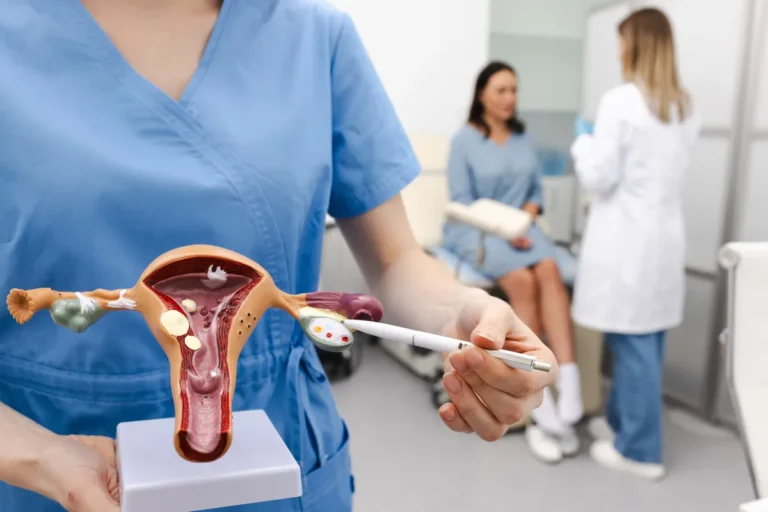
Mirena IUD vs Hysterectomy for Heavy Periods: Results, Risks and How to Choose
If heavy periods are wearing you down, you may have been offered two very different answers: a hormonal IUD such as Mirena, placed in a short office visit, or a hysterectomy, which ends periods for good. The two have been compared head to head in a randomized trial, and the results are more balanced than many people expect.[1] This guide explains how each option works, how well it controls bleeding, the side effects and risks, and which situations tend to favor one or the other.
The short answer
- Mirena first, for many women: when tests find no cause that needs surgery, guidelines suggest a hormonal IUD as a first treatment for heavy menstrual bleeding.[4]
- Similar quality of life: in the Finnish trial that randomly assigned women to Mirena or hysterectomy, quality of life and satisfaction were similar after 5 years, and Mirena cost less.[1]
- But not always the last step: in that same trial, about 4 in 10 women who started with Mirena had chosen a hysterectomy by year 5.[1]
- Reversible vs permanent: Mirena can be removed at any time; a hysterectomy cannot be undone and ends any chance of pregnancy.
- When surgery may make more sense: large fibroids or fibroids that distort the inside of the uterus, a hormonal IUD that has not helped or keeps coming out, or other problems such as prolapse or abnormal cells.[4][5]
What counts as heavy menstrual bleeding
Doctors used to define heavy bleeding as losing 80 mL of blood or more per period, but nobody measures that at home. Today the definition is simpler: bleeding that you feel is excessive and that affects your quality of life.[3] The CDC lists these signs:[8]
- soaking through one or more pads or tampons every hour for several hours in a row, or needing to change in less than 2 hours;
- needing to double up on pads, or to change protection during the night;
- periods that last more than 7 days;
- clots the size of a quarter or larger;
- bleeding that stops you from doing your usual activities, or that leaves you tired, short of energy or short of breath (possible signs of anemia).
Before choosing any treatment, the cause should be checked. Heavy bleeding can come from fibroids, polyps, adenomyosis, hormonal changes, bleeding disorders or, less often, precancerous changes or cancer of the uterine lining, so your doctor may suggest blood tests, an ultrasound or a biopsy.[7] The cause matters: a hormonal IUD works best when the inside of the uterus has a normal shape. Our guide to reasons for a hysterectomy covers these conditions in more detail.
How Mirena works
Mirena is a small T-shaped plastic device that a clinician places inside the uterus through the vagina and cervix, usually in an office visit without anesthesia. Its stem holds 52 mg of levonorgestrel, a progestin, which it releases slowly into the uterus. The hormone keeps the lining of the uterus thin, so there is much less tissue to shed each month and bleeding becomes lighter.[2] Because the hormone acts mainly inside the uterus, most women keep ovulating, and the ovaries keep producing their own hormones.[2]
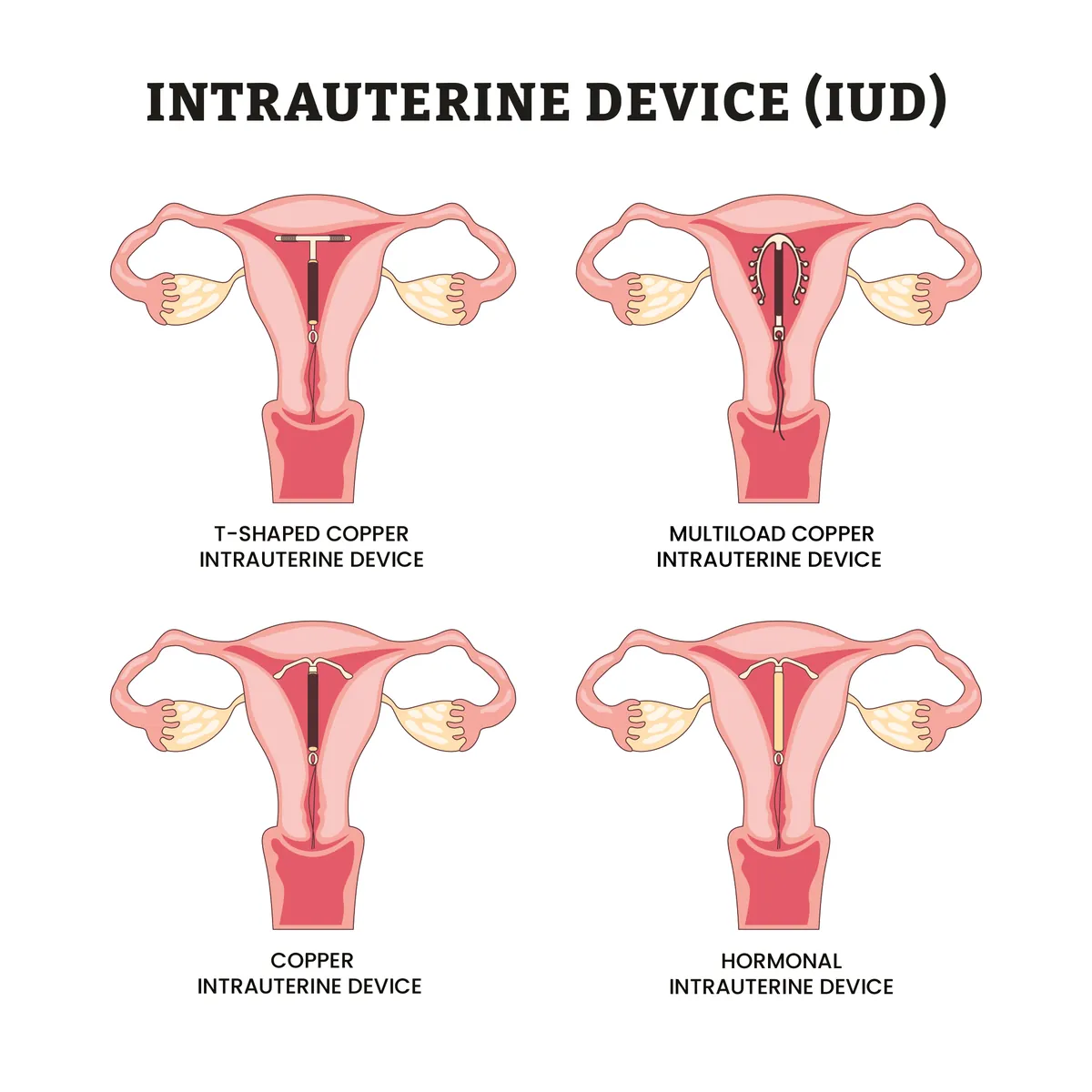
In the United States, Mirena is approved to prevent pregnancy for up to 8 years and to treat heavy menstrual bleeding for up to 5 years in women who also want an IUD for contraception. If heavy bleeding still needs treatment after 5 years, it is replaced.[2] Liletta, another IUD with the same 52 mg dose, received the same 5-year heavy bleeding approval in 2023.[9] Smaller hormonal IUDs (Kyleena, Skyla) contain less hormone and are not approved for heavy bleeding.
How well Mirena controls heavy bleeding
- In the approval trial, women with measured heavy bleeding used either Mirena or progestin tablets for 6 cycles. Mirena reduced blood loss significantly more, and almost 9 in 10 Mirena users were treated successfully, with blood loss cut by more than half.[2]
- Compared with tablets and other medicines, a Cochrane review of 25 randomized trials found that the hormonal IUD may improve bleeding and quality of life more.[3]
- Compared with endometrial ablation (destroying the lining of the uterus), it is probably similar for controlling bleeding.[3]
- Over the long term, a large UK trial in primary care (ECLIPSE) found that about half the women who started with a hormonal IUD were still using it after 5 years, and around 80% had not needed surgery.[6]
One thing to expect: in the first 3 to 6 months, bleeding and spotting days are often more frequent and irregular. They usually settle after that, and the amount of blood lost per cycle keeps falling. About 1 in 5 Mirena users have no periods at all after a year.[2] Many women who give up on the device do so in these early months, so it is worth knowing in advance that this phase is common and usually temporary.
Mirena vs hysterectomy: what the head-to-head trial found
The most direct evidence comes from a Finnish randomized trial of 236 women with heavy periods, average age 43, who were assigned either a hormonal IUD or a hysterectomy and followed for 5 years.[1]
- Quality of life and satisfaction were similar in both groups at 5 years.
- Costs (medical bills plus time off work) were about 40% lower in the IUD group, even counting the women who later had surgery.
- About 42% of the women assigned to the IUD had a hysterectomy during the 5 years. The other 58% avoided major surgery.
The Cochrane review, which pooled the trials comparing the two, judged the evidence too uncertain to say whether one is better than the other for bleeding or satisfaction.[3] In practice, this means that trying Mirena first does not seem to leave women worse off, and for more than half it may make surgery unnecessary. A hysterectomy stays available if the IUD does not work.
| Mirena (hormonal IUD) | Hysterectomy | |
|---|---|---|
| Procedure | Placed in an office visit, usually in a few minutes | Major surgery under general or regional anesthesia |
| Recovery | Cramping for a day or two; most women return to normal activities right away | Usually 2 to 6 weeks, depending on the type of surgery |
| Effect on periods | Much lighter for most; irregular spotting at first; about 1 in 5 stop by one year | Periods stop permanently |
| Fertility | Returns after removal | Pregnancy no longer possible |
| Main risks | Irregular bleeding, expulsion, ovarian cysts; rarely perforation | Bleeding, infection, blood clots, injury to bladder or bowel, anesthesia risks |
| Reversible? | Yes | No |
| Duration | Up to 5 years for heavy bleeding, then replaced | Permanent |
Side effects and risks of Mirena
Most side effects are mild, but they are the main reason some women have the device removed. According to the U.S. prescribing information:[2]
- Irregular bleeding and spotting, especially in the first 3 to 6 months.
- Pain or cramping during and shortly after insertion. Ask in advance what pain relief your clinic offers.
- Ovarian cysts in about 8% of users. Most cause no symptoms and go away on their own within 2 to 3 months.
- Expulsion: the device partly or completely came out in 4.5% of women over 5 years in clinical trials. A return of heavier bleeding can be a sign. The label also lists fibroids or other problems that distort the uterine cavity as a reason not to use Mirena.
- Perforation (the device pushing into or through the wall of the uterus) occurred in fewer than 1 in 1,000 insertions in the trials. It is more likely soon after childbirth or during breastfeeding.
- Other effects reported include headache, breast tenderness, acne, mood changes and pelvic infection, which is most likely in the first weeks after insertion.
Risks of a hysterectomy
A hysterectomy is generally safe, but it is major surgery. The NHS lists these possible complications: heavy bleeding that may need a transfusion, wound or urinary infection, blood clots, damage to the bladder, bowel or ureters (rare), and the risks of anesthesia. Even when the ovaries are kept, menopause may come earlier than expected; when they are removed, menopause starts straight away.[5] How long recovery takes depends largely on the route: keyhole (laparoscopic or robotic) and vaginal hysterectomy usually heal faster than open surgery. If you keep your ovaries, our guide to menopause after hysterectomy with ovaries intact explains what to watch for.
When Mirena is often a good first choice
- Tests show no cause that needs surgery, or only small fibroids (under about 3 cm) that do not distort the uterine cavity, or suspected adenomyosis.[4]
- You want to avoid surgery, anesthesia and weeks of recovery.
- You might want a pregnancy in the future, or you are not ready for a permanent decision.
- You also need contraception.
- You are close to menopause, when periods will stop on their own within a few years.
When a hysterectomy may be the better option
- Fibroids are large, or they change the shape of the inside of the uterus, so a hormonal IUD is not suitable or less likely to work.[2][4] Our page on myomectomy vs hysterectomy compares the surgical options for fibroids.
- You have already tried a hormonal IUD and other treatments, and bleeding is still affecting your life.
- The device has come out repeatedly, or you cannot tolerate its side effects.
- There is another reason for surgery at the same time, such as prolapse, severe adenomyosis or endometriosis pain, or precancerous changes in the lining of the uterus.
- You are sure you do not want more children and you prefer a single, permanent solution, after understanding the risks.
If endometriosis is part of the picture, our guide to hysterectomy for endometriosis explains what surgery can and cannot fix.
Mirena near menopause and with HRT
Many women with heavy periods are in their 40s, when bleeding often becomes heavier and more irregular. A hormonal IUD can carry them through to menopause, when periods stop naturally. It has a second use at this stage: women who still have a uterus and take estrogen for menopause symptoms need a progestogen to protect the lining of the uterus, and in the UK the NHS lists Mirena as one way to provide it, for up to 5 years.[10] In the United States this use is not on the Mirena label, so it is a decision to make with your doctor. Keeping the uterus and using an IUD also avoids the earlier menopause that can sometimes follow a hysterectomy; our guide to surgical menopause explains what happens when the ovaries are removed.
Other options to discuss
Mirena and hysterectomy are not the only choices. Tranexamic acid tablets (taken only on heavy days), anti-inflammatory painkillers, birth control pills, patches or rings, and progestin tablets can all reduce bleeding.[4][7] Endometrial ablation destroys the lining of the uterus in a short procedure and is an option for women who do not plan a future pregnancy. Our full guide to alternatives to hysterectomy compares them.
Cost and insurance
Under the Affordable Care Act, most health plans must cover IUDs as a contraceptive method with no copay or coinsurance when an in-network provider places them, even before the deductible is met; some religious employers are exempt.[11] Because Mirena is approved only for heavy bleeding in women who also use it for contraception, ask your insurer how it will be billed. A hysterectomy usually involves a deductible and coinsurance, plus time off work; our guide to hysterectomy cost explains what to expect.
Questions to ask your doctor
- What is causing my heavy bleeding, and which tests have ruled out other causes?
- Do I have fibroids, and do they change the shape of the inside of my uterus?
- How likely is a hormonal IUD to work for me, and how long should I give it?
- What pain relief do you offer for insertion?
- If I choose surgery, which type of hysterectomy would you recommend, and would my ovaries be kept?
- Am I anemic, and do I need iron while we decide?
Our checklist on how to prepare for a hysterectomy has more questions if you are leaning toward surgery.
When to get medical help
Call your doctor if, after an IUD is placed, you have severe or worsening pelvic pain, fever or chills, unusual or bad-smelling discharge, pain during sex, if you cannot feel the strings or can feel the hard part of the device, if heavy bleeding comes back, or if you think you might be pregnant.[2] Seek emergency care if you are soaking a pad or more every hour and feel dizzy, faint, short of breath or have chest pain.
Sources
- Hurskainen R, Teperi J, Rissanen P, et al. Clinical outcomes and costs with the levonorgestrel-releasing intrauterine system or hysterectomy for treatment of menorrhagia: randomized trial 5-year follow-up. JAMA. 2004;291(12):1456–1463. pubmed.ncbi.nlm.nih.gov
- Bayer HealthCare. Mirena (levonorgestrel-releasing intrauterine system) prescribing information. drugs.com
- Bofill Rodriguez M, Lethaby A, Jordan V. Progestogen-releasing intrauterine systems for heavy menstrual bleeding. Cochrane Database of Systematic Reviews. 2020;(6):CD002126. cochranelibrary.com
- National Institute for Health and Care Excellence (NICE). Heavy menstrual bleeding: assessment and management (NG88). nice.org.uk
- NHS. Hysterectomy: risks. nhs.uk
- Kai J, Middleton L, Daniels J, et al. Usual medical treatments or levonorgestrel-IUS for women with heavy menstrual bleeding: long-term randomised pragmatic trial in primary care. British Journal of General Practice. 2016;66(653):e861–e870. pmc.ncbi.nlm.nih.gov
- American College of Obstetricians and Gynecologists. Heavy menstrual bleeding (patient FAQ). acog.org
- Centers for Disease Control and Prevention. About heavy menstrual bleeding. cdc.gov
- Medicines360. Liletta (levonorgestrel-releasing intrauterine system) 52 mg prescribing information. drugs.com
- NHS. Types of hormone replacement therapy (HRT). nhs.uk
- HealthCare.gov. Birth control benefits. healthcare.gov
This article is for general information and is not a substitute for medical advice. The right treatment for heavy periods depends on what is causing them, your plans for pregnancy and your own preferences, so always discuss your situation with your gynecologist or doctor, and contact them or emergency services if bleeding is very heavy or you feel faint.