Hysterectomy for Adenomyosis: When It Makes Sense, Options and Recovery
Adenomyosis happens when the tissue that lines the uterus grows into the muscle of the uterine wall. It can cause very painful, heavy periods, and for many women it takes years to get a name for the problem.[1][3] Because adenomyosis lives inside the uterus, removing the uterus is the only treatment that cures it for good.[1][2] A hysterectomy is also major surgery that ends any chance of pregnancy, and some women get good relief from treatments that keep the uterus. This guide explains how adenomyosis is diagnosed, which treatments to talk about first, when a hysterectomy makes sense, which operation is usually offered, what happens to the ovaries and cervix, and what life afterward is like.
It is based on guidance from the NHS, the National Institute for Health and Care Excellence (NICE), the American College of Obstetricians and Gynecologists (ACOG), a Cochrane review and published studies. If your doctor also suspects endometriosis or fibroids, see our guides to hysterectomy for endometriosis and myomectomy vs hysterectomy for fibroids.
Key points
- Adenomyosis is not cancer. It causes heavy and painful periods, pelvic pain and pain during sex in some women, while others have no symptoms at all.[1][2]
- It is usually diagnosed with a transvaginal ultrasound, sometimes with an MRI. The only certain diagnosis comes from examining the uterus after a hysterectomy.[2][5]
- A hormonal IUD, other hormone treatments, pain relief and uterine artery embolization can all help. A hysterectomy is usually offered when these have not worked or are not wanted.[1][5]
- In the largest comparison so far, more women were satisfied one year after a hysterectomy (95%) than after embolization (73%), although quality of life improved with both.[9]
- Adenomyosis does not affect the ovaries. Removing them is a separate decision.
- If pain continues after a hysterectomy, endometriosis is one possible reason, so ask whether it has been looked for.[5]
Adenomyosis in brief
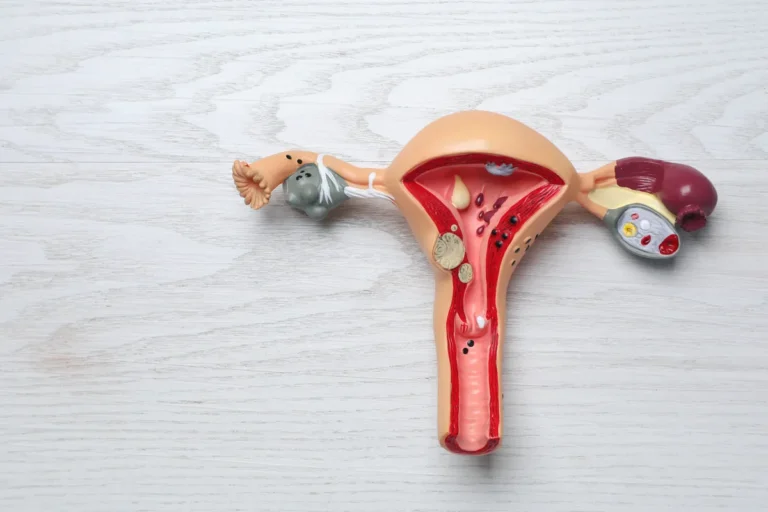
In adenomyosis, tissue similar to the lining of the uterus (the endometrium) grows into its muscular wall (the myometrium). This tissue still responds to the monthly hormone cycle, which can make the uterus swollen, tender and enlarged. The uterus may grow to two or three times its normal size, although it usually stays no bigger than a 12-week pregnancy.[2] The changes can be spread through the wall (diffuse adenomyosis) or gathered into a lump called an adenomyoma, which can look like a fibroid on a scan.
It is different from endometriosis, where similar tissue grows outside the uterus, for example on the ovaries or the lining of the pelvis. The two often occur together, and having endometriosis makes adenomyosis more likely.[1]
How common is it?
Nobody knows exactly. For decades, adenomyosis could only be confirmed by examining the uterus after a hysterectomy, so most of the figures come from women who had already had surgery. In those studies, the share of uteruses with adenomyosis ranged from about 9% to 62%, mostly because pathologists used different definitions and examined different numbers of samples.[3] In one study of 298 women having a hysterectomy for any reason, 36% had adenomyosis, and they had more pelvic pain, period pain and pain during sex than the women without it.[4] Among women sent for a transvaginal ultrasound at a general gynecology clinic in the UK, about 1 in 5 had signs of adenomyosis.[3]
Adenomyosis is most often found in women over 35, but it can affect anyone who has periods, including younger women.[1][3] Having given birth seems to make it more likely.[1][3]
Symptoms
- Very painful periods (dysmenorrhea) that may get worse over the years.
- Heavy or long periods, sometimes with clots, which can lead to iron-deficiency anemia.
- Pelvic pain or pressure between periods, and a bloated or full feeling in the lower belly.
- Pain during or after sex.
These symptoms overlap with endometriosis, fibroids, polyps and thickening of the uterine lining, which is one reason diagnosis can take a long time.[1][2] Symptoms often ease after menopause, when hormone levels fall.[2]

How adenomyosis is diagnosed
Your doctor will ask about your periods and pain and may examine you. A uterus that feels bulky and tender can suggest adenomyosis.[2][5] NICE, which writes clinical guidelines for England, recommends a transvaginal ultrasound (a scan with a probe placed in the vagina) as the first test for women with heavy periods and significant period pain or a bulky, tender uterus, with an abdominal ultrasound or MRI if a transvaginal scan is not suitable.[5] An international group of ultrasound experts has agreed on a common set of features to look for, which has made scan reports more consistent.[6]
A scan can strongly suggest adenomyosis, but it cannot prove it. The definite diagnosis comes from the pathologist who examines the uterus after a hysterectomy.[2] This matters for two reasons. First, some women only learn they had adenomyosis from their pathology report. Second, if a hysterectomy is being considered mainly for pain, it is worth making sure other causes, especially endometriosis, have been considered, because NICE warns that pain with heavy periods may come from endometriosis rather than adenomyosis.[5]
Treatments to talk about first
Treatment depends on how much your symptoms affect you, your age, how close you are to menopause and whether you want a pregnancy in the future. The options usually discussed before surgery are:[1][2][5]
- A hormonal IUD (levonorgestrel intrauterine system, such as Mirena). It thins the lining and often reduces bleeding and pain. NICE suggests considering it as the first treatment for heavy periods when adenomyosis is suspected or diagnosed. Our guide to the Mirena IUD vs hysterectomy explains how it compares.
- Other hormone treatments, such as the progestogen-only pill, the combined pill or patch, or medicines that temporarily lower estrogen. These can control symptoms while you take them, but symptoms often come back when they stop.
- Medicines for pain and bleeding, such as NSAIDs (for example ibuprofen) and tranexamic acid.
- Uterine artery embolization (UAE), in which a radiologist blocks the blood supply to the affected tissue through a small tube placed in an artery.
How do these compare with a hysterectomy? A small randomized trial in Turkey assigned 75 women with adenomyosis to a hormonal IUD or a hysterectomy. After one year, hemoglobin levels had risen to similar levels in both groups, and quality of life improved in both.[7] A review of studies on embolization found that 83% of women reported their symptoms improved.[8] In a Dutch study of 101 women who could choose between embolization and hysterectomy, both treatments clearly improved quality of life after one year. Pain improved more after a hysterectomy, and 95% of women were satisfied after a hysterectomy compared with 73% after embolization. The authors concluded that embolization is a valid way to keep the uterus, and that hysterectomy remains the treatment of choice for women who want a definite solution.[9]
For a wider look at what can be tried before surgery, see our guide to alternatives to hysterectomy.
When a hysterectomy for adenomyosis makes sense
The NHS describes removing the womb as the only way to cure adenomyosis, offered when other treatments have not worked.[1] In practice, women and their doctors often settle on a hysterectomy when several of these apply:
- You are sure you do not want a pregnancy in the future.
- Pain or heavy bleeding is affecting your work, sleep, relationships or daily life, or has caused anemia.
- A hormonal IUD, other hormone treatments or embolization have not helped enough, caused side effects you could not live with, or are not what you want.
- You want a permanent answer rather than treatment you need to keep taking until menopause.
- You also have fibroids or another problem in the uterus that a hysterectomy would treat at the same time.
Timing matters too. Because symptoms often settle after menopause,[2] a woman in her early 50s whose symptoms are manageable may choose to wait, while a woman in her late 30s with severe pain faces many more years of symptoms. None of this makes a hysterectomy automatic. It is your decision, and it is reasonable to ask for a second opinion. Our guide to the signs and reasons you might need a hysterectomy gives a wider view.
Which type of hysterectomy?
For non-cancerous conditions, ACOG recommends a vaginal hysterectomy whenever possible, and a laparoscopic (keyhole) hysterectomy, including robotic surgery, when a vaginal operation is not. An abdominal (open) hysterectomy is kept for cases where these are not feasible.[10] A Cochrane review of randomized trials found that women return to normal activities sooner after vaginal and laparoscopic hysterectomy than after an abdominal operation.[11]
- Vaginal hysterectomy: no cuts on the abdomen. Best suited to a uterus that is normal in size or only moderately enlarged.
- Laparoscopic or robotic hysterectomy: several small cuts and a camera. It also lets the surgeon look for and treat endometriosis in the pelvis during the same operation.
- Abdominal hysterectomy: one larger cut. It is more likely when the uterus is very large, there are many large fibroids as well, or there is severe scarring from previous surgery or endometriosis.
If your uterus is enlarged, ask your surgeon how it will be removed. A large uterus sometimes has to be cut into smaller pieces (morcellation) to come out through the vagina or a small cut, and you can ask whether a containment bag will be used.
Keeping the cervix: total or supracervical?
In a total hysterectomy the uterus and cervix are removed. In a supracervical (subtotal or “partial”) hysterectomy the cervix is left in place. Women who keep the cervix are more likely to have light cyclical bleeding afterward and still need cervical screening.[12] With adenomyosis there is one more point to discuss: the condition can reach the lower part of the uterus, close to the cervix. Rare case reports describe adenomyosis growing again in a cervix left behind, years after a supracervical hysterectomy.[13] Ask your surgeon whether keeping the cervix is sensible in your case. Our guide to partial vs total hysterectomy compares the two operations.
What about the ovaries?
Adenomyosis grows in the uterus, so once the uterus is removed it cannot come back, even if the ovaries keep making hormones. Adenomyosis alone is therefore not a reason to remove healthy ovaries. If your ovaries are kept and you have not reached menopause, they go on working, and menopause will come at about its natural time. NICE asks doctors to explain that ovarian function can still be affected, even when the ovaries are kept.[5] The decision can be different if you also have endometriosis on the ovaries. Our guide to hysterectomy and hormones explains what to expect in each case.
Questions to ask your surgeon
- How sure are you that my symptoms come from adenomyosis? What did my scan show?
- Could I also have endometriosis? Will you look for it and treat it during surgery?
- Which treatments that keep the uterus would suit me, and why do you recommend a hysterectomy?
- Which route do you recommend (vaginal, laparoscopic, robotic or abdominal), and why?
- Will you remove my cervix? My fallopian tubes? My ovaries? Why?
- Is my blood count high enough for surgery, or should I take iron first?
- How long will I be in the hospital, and how much time off should I plan for?
Recovery
Recovery depends mainly on the type of operation, not on the adenomyosis. The NHS says that after a vaginal or laparoscopic hysterectomy you may be able to go home 1 to 4 days later (some hospitals send women home the same day), and that after an abdominal hysterectomy the stay is usually up to 5 days. Full recovery after an abdominal hysterectomy can take about 6 to 8 weeks, and it is often shorter after vaginal or keyhole surgery.[15] Light bleeding or discharge for a few weeks is normal. Our week-by-week recovery guide goes through what to expect.

Life after a hysterectomy for adenomyosis
Once the uterus is removed, periods stop, so heavy bleeding and period pain caused by adenomyosis end. In the Dutch study, women who had a hysterectomy for adenomyosis reported a clear improvement in quality of life, pain and sexual activity one year later.[9] In a larger US study of 1,299 women who had a hysterectomy for non-cancerous conditions, symptoms, depression and anxiety fell and quality of life improved over two years. However, 8% still had at least as many severe symptoms as before surgery.[14]
If pelvic pain continues or comes back after a hysterectomy for adenomyosis, it is not adenomyosis returning in the uterus, which is gone. Common causes include endometriosis, scar tissue, bladder or bowel problems and pelvic floor muscle tension. Ask your doctor to look into it rather than accepting it as normal. If sex is painful, our guide to sex after hysterectomy covers what can help.
When to seek urgent care
Before surgery, get medical help right away if you have very heavy bleeding (soaking a pad every hour for several hours), feel faint, dizzy or very short of breath, or have sudden severe pelvic pain. After surgery, contact your surgeon or call 911 if you have:
- A fever of 100.4°F (38°C) or higher, or chills.
- Heavy vaginal bleeding, or bleeding that gets heavier instead of lighter.
- Pain that gets worse instead of better, or is not controlled by your pain medicine.
- A wound that is red, hot, swollen, opening or leaking pus.
- Pain, swelling or redness in one leg, chest pain or sudden shortness of breath, which can be signs of a blood clot.
- Foul-smelling discharge, trouble passing urine, or vomiting that does not stop.
Frequently asked questions
Is a hysterectomy the only cure for adenomyosis?
Yes. It is the only treatment that removes adenomyosis completely.[1][2] Other treatments can control the symptoms, sometimes very well, and symptoms often ease after menopause.
Can adenomyosis come back after a hysterectomy?
Not after a total hysterectomy, because the uterus and cervix have been removed. After a supracervical hysterectomy, rare cases of adenomyosis in the remaining cervix have been reported.[13]
Will I go into menopause after a hysterectomy for adenomyosis?
Not if your ovaries are kept. Your periods stop, but the ovaries keep working until your natural menopause. If both ovaries are removed before menopause, menopause starts straight away.
Can I find out I have adenomyosis only after surgery?
Yes. Adenomyosis is often first confirmed in the pathology report after a hysterectomy done for heavy bleeding, fibroids or pain, because the definite diagnosis needs the uterus to be examined under a microscope.[2][3]
Is a hormonal IUD worth trying first?
For many women, yes. NICE suggests it as a first treatment for heavy periods when adenomyosis is suspected, and in a small trial it improved blood counts about as much as a hysterectomy after one year.[5][7] It does not work for everyone, so discuss what you can expect in your case with your gynecologist.
Sources
- NHS. Adenomyosis. nhs.uk
- Kilpatrick C. Uterine adenomyosis. Merck Manual Professional Version. Reviewed October 2025. merckmanuals.com
- Upson K, Missmer SA. Epidemiology of adenomyosis. Seminars in Reproductive Medicine. 2020;38(2-03):89–107. pubmed.ncbi.nlm.nih.gov
- Yeniel O, Cirpan T, Ulukus M, et al. Adenomyosis: prevalence, risk factors, symptoms and clinical findings. Clinical and Experimental Obstetrics & Gynecology. 2007;34(3):163–167. pubmed.ncbi.nlm.nih.gov
- National Institute for Health and Care Excellence. Heavy menstrual bleeding: assessment and management. NICE guideline NG88. nice.org.uk
- Harmsen MJ, Van den Bosch T, de Leeuw RA, et al. Consensus on revised definitions of Morphological Uterus Sonographic Assessment (MUSA) features of adenomyosis: results of modified Delphi procedure. Ultrasound in Obstetrics & Gynecology. 2022;60(1):118–131. pubmed.ncbi.nlm.nih.gov
- Ozdegirmenci O, Kayikcioglu F, Akgul MA, et al. Comparison of levonorgestrel intrauterine system versus hysterectomy on efficacy and quality of life in patients with adenomyosis. Fertility and Sterility. 2011;95(2):497–502. pubmed.ncbi.nlm.nih.gov
- de Bruijn AM, Smink M, Lohle PNM, et al. Uterine artery embolization for the treatment of adenomyosis: a systematic review and meta-analysis. Journal of Vascular and Interventional Radiology. 2017;28(12):1629–1642. pubmed.ncbi.nlm.nih.gov
- Trommelen LM, Semmler A, de Bruijn AM, et al. Quality of life 1 year after uterine artery embolization vs hysterectomy for symptomatic adenomyosis (QUESTA study). Acta Obstetricia et Gynecologica Scandinavica. 2025;104(8):1558–1574. pubmed.ncbi.nlm.nih.gov
- American College of Obstetricians and Gynecologists. Committee Opinion No. 701: Choosing the route of hysterectomy for benign disease. Obstetrics & Gynecology. 2017;129(6):e155–e159. pubmed.ncbi.nlm.nih.gov
- Aarts JWM, Nieboer TE, Johnson N, et al. Surgical approach to hysterectomy for benign gynaecological disease. Cochrane Database of Systematic Reviews. 2015;(8):CD003677. pubmed.ncbi.nlm.nih.gov
- Lethaby A, Mukhopadhyay A, Naik R. Total versus subtotal hysterectomy for benign gynaecological conditions. Cochrane Database of Systematic Reviews. 2012;(4):CD004993. pubmed.ncbi.nlm.nih.gov
- Tien CT, Ding DC. Adenomyoma recurrence 7 years after laparoscopic supracervical hysterectomy: a case report and literature review. Medicine (Baltimore). 2023;102(46):e36089. pubmed.ncbi.nlm.nih.gov
- Kjerulff KH, Langenberg PW, Rhodes JC, Harvey LA, Guzinski GM, Stolley PD. Effectiveness of hysterectomy. Obstetrics & Gynecology. 2000;95(3):319–326. pubmed.ncbi.nlm.nih.gov
- NHS. Hysterectomy: recovery. nhs.uk
This article is for general information and is not a substitute for medical advice. Adenomyosis and its treatment differ a great deal from one woman to another, so please discuss your own scans, symptoms and plans for the future with your gynecologist, and contact them or emergency services if you have heavy bleeding or any symptom that worries you.