Hysterectomy for Fibroids: When It Makes Sense, Surgery Options and Recovery
Fibroids are the most common reason for a hysterectomy in the United States.[1][2] Removing the uterus is the only treatment that cures fibroids for good: there are no more periods, the fibroids cannot grow back in the uterus, and the pressure from a large uterus goes away.[1][2] It is also major surgery that ends any chance of pregnancy, and many women with fibroids do well with other treatments. This guide explains when a hysterectomy for fibroids makes sense, which type of operation is usually offered, what changes when the uterus is large, what “morcellation” means, how to prepare and what recovery and life afterward look like.
It is based on guidance from the American College of Obstetricians and Gynecologists (ACOG), the US Office on Women’s Health, the NHS, the US Food and Drug Administration (FDA) and Cochrane reviews of the research. If you are still deciding between surgeries, our guides to myomectomy vs hysterectomy and to alternatives to hysterectomy go into the other options in more detail.
Key points
- Fibroids are very common and are not cancer. Many cause no symptoms and need no treatment.[2][3]
- A hysterectomy is a definitive treatment for fibroids, but it is not the only one. It is usually considered when other treatments have not helped or are not suitable, and when you do not want a future pregnancy.[1][4]
- Most hysterectomies for fibroids can be done through the vagina or with keyhole surgery. A very large uterus may need an abdominal (open) operation.[5][6]
- Fibroids do not affect the ovaries. Whether to keep or remove them is a separate decision.
- Ask your surgeon how the uterus will be removed, including whether it will be cut into pieces (morcellated) and whether a containment bag will be used.[7][8]
- Most women say their symptoms and quality of life are better after a hysterectomy for a benign condition, but not everyone does.[9]
Fibroids in brief
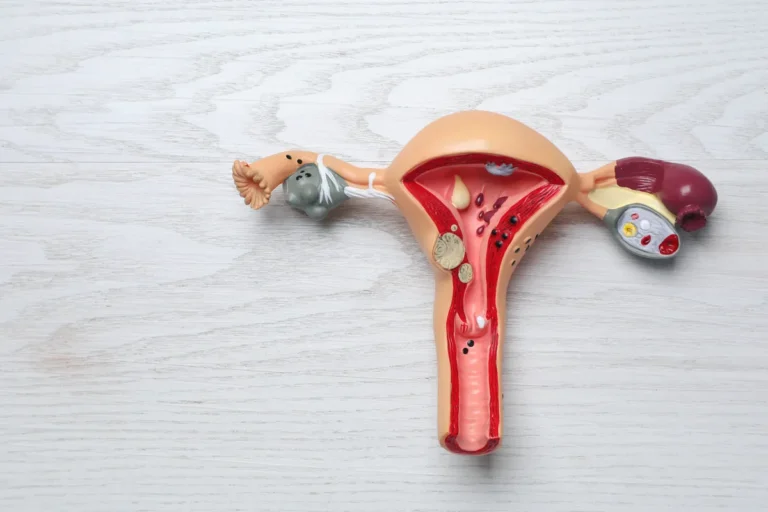
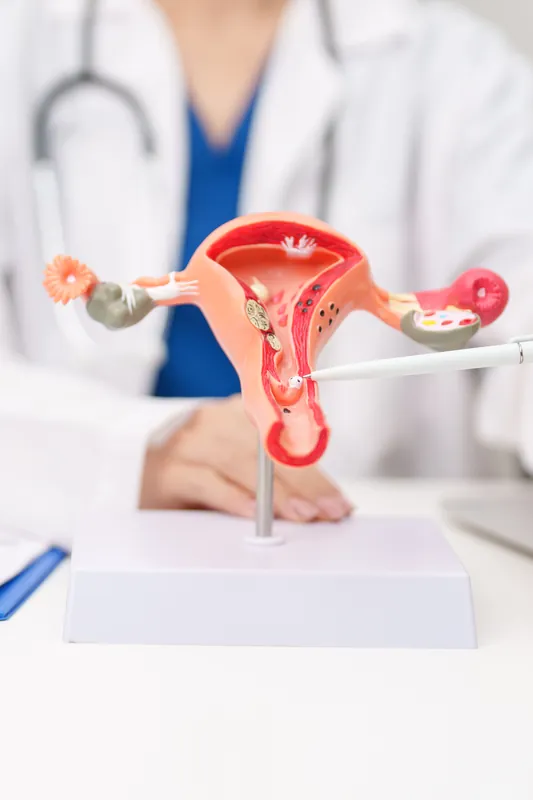
Fibroids (uterine leiomyomas or myomas) are non-cancerous growths of muscle and fibrous tissue in or on the wall of the uterus. They can be as small as a seed or larger than a grapefruit, and many women have several. Depending on where they grow, doctors describe them as submucosal (bulging into the cavity of the uterus), intramural (inside the muscle wall) or subserosal (on the outer surface, sometimes on a stalk).[1][2]
They are extremely common. In a US study that screened women aged 35 to 49 with ultrasound, the estimated share who had developed fibroids by age 50 was more than 80% of Black women and nearly 70% of white women. Fibroids also appeared at younger ages in Black women.[3] Fibroids are most common in the 40s and early 50s, and they usually shrink after menopause.[2]
The symptoms that lead women to consider surgery are usually one or more of these:[1][2]
- Heavy or long periods, sometimes with clots, which can cause iron-deficiency anemia, tiredness and shortness of breath.
- Pressure or “bulk” symptoms: a swollen or firm lower belly, needing to pee often, constipation or a feeling of fullness in the pelvis.
- Pelvic pain, pain during sex or lower back pain.
When a hysterectomy for fibroids makes sense
ACOG describes hysterectomy as a definitive and effective treatment for fibroids, while noting that many patients prefer other options because they want a future pregnancy or want to keep their uterus.[1] The NHS says surgery may be needed if medicine does not help, the fibroids are too large or symptoms are getting worse, and that the type of surgery depends on the size, number and position of the fibroids.[4]
In practice, a hysterectomy is often the option women and their doctors settle on when several of these apply:
- You are sure you do not want a pregnancy in the future.
- Your symptoms are affecting daily life, work or sleep, or heavy bleeding has caused anemia.
- Medicines, a hormonal IUD or a less invasive procedure have not worked, are not suitable or are not what you want.
- There are many fibroids, or the uterus is very enlarged, so removing the fibroids one by one is unlikely to solve the problem for long.
- You have another condition in the uterus as well, such as adenomyosis, that a hysterectomy would also treat.
- You want to avoid the chance of fibroids coming back and needing more treatment later. New fibroids can grow after a myomectomy or other treatments that keep the uterus.[1]
None of these makes a hysterectomy automatic. It is your decision, made with your gynecologist, and it is reasonable to ask for a second opinion. For a wider view of when a hysterectomy is offered, see our guide to the signs and reasons you might need a hysterectomy.
Options to talk about first
Depending on your fibroids and your goals, other options include medicines that reduce bleeding or shrink fibroids for a time, a hormonal IUD, removing a fibroid that bulges into the cavity through the cervix (hysteroscopic myomectomy), removing the fibroids in an operation that keeps the uterus (myomectomy), uterine artery embolization, and radiofrequency ablation.[1][4] Endometrial ablation treats heavy bleeding but is less suited to a uterus distorted by fibroids. Each of these keeps the uterus, but fibroids can return or new ones can grow, and some women go on to need a hysterectomy later.[1]
Close to menopause
Fibroids usually stop growing or shrink after menopause, as estrogen levels fall.[2] If you are in your late 40s or early 50s and your symptoms are manageable, some women choose to control them with medicine and wait. If you are already past menopause, new bleeding, a new fibroid or a fibroid that is growing should always be checked, because these are not expected after menopause.
A “fast-growing” fibroid
Many women are told their fibroid is growing quickly and worry that it may be cancer. Uterine sarcomas, including leiomyosarcoma, are rare cancers that can look like a fibroid on scans. ACOG notes that leiomyosarcoma cannot be reliably diagnosed before surgery, and that research has not shown a large uterus or rapid growth to be linked with a higher risk of it. Factors that do raise the risk include being older or past menopause, long-term tamoxifen use, previous pelvic radiation and some inherited conditions.[8] If you have any of these, tell your surgeon, because it affects how the uterus should be removed.
Which type of hysterectomy for fibroids?
For non-cancerous conditions, ACOG recommends a vaginal hysterectomy whenever it is possible, and a laparoscopic hysterectomy (keyhole surgery, including robotic surgery) when a vaginal operation is not. An abdominal (open) hysterectomy is kept for cases where these are not feasible.[5] A Cochrane review of randomized trials found that women return to normal activities sooner after vaginal and laparoscopic hysterectomy than after abdominal hysterectomy.[6]
- Vaginal hysterectomy: no cuts on the abdomen. Most suitable when the uterus is small or moderately enlarged and can be brought down through the vagina.
- Laparoscopic hysterectomy: several small cuts on the abdomen and a camera. It is the most common minimally invasive route for fibroids. Robotic hysterectomy is a form of laparoscopic surgery.
- Abdominal hysterectomy: one larger cut, across the bikini line or up and down. It is more likely when the uterus is very large, when there are many large fibroids in awkward positions, or when cancer is suspected. The hospital stay and recovery are longer.
When the uterus is large
Doctors often describe the size of a uterus with fibroids by comparing it with pregnancy, for example “the size of a 16-week pregnancy”. A larger uterus is harder to remove through the vagina or small cuts, but how large is “too large” for keyhole surgery depends a great deal on the surgeon’s experience, the shape of the uterus and where the fibroids sit.[5] It is fair to ask your surgeon:
- Which route they recommend for you and why.
- How many hysterectomies for a uterus of your size they do with keyhole surgery.
- How likely it is that a keyhole operation would need to be changed to an open one during surgery.
- Whether medicine to shrink the fibroids before surgery could allow a less invasive operation.
Total or supracervical (keeping the cervix)?
In a total hysterectomy the uterus and cervix are removed. In a supracervical (subtotal) hysterectomy the cervix is left in place. Keeping the cervix makes the operation slightly simpler in some cases, but light cyclical bleeding is more likely to continue afterward, and you still need cervical screening.[10] Our guide to partial vs total hysterectomy compares the two.
What about the ovaries?
Fibroids grow in the uterus, not in the ovaries, so having fibroids is not in itself a reason to remove the ovaries. If your ovaries are kept and you have not reached menopause, they go on making hormones and you will not go into menopause straight after surgery, although you will no longer have periods. In the Maryland Women’s Health Study, removal of both ovaries was one of the factors linked with less symptom relief two years after hysterectomy.[9] Our guides on menopause after a hysterectomy with the ovaries intact and on hysterectomy and hormones explain what to expect in each case.
Morcellation: how a large uterus is taken out
In a laparoscopic or vaginal hysterectomy, a uterus with fibroids is often too big to come out whole through the vagina or a small cut. The surgeon may then cut it into smaller pieces, a technique called morcellation. It can be done by hand with a scalpel, or with an electric device called a power morcellator.[7][8]
The concern is the rare hidden cancer. If what looks like a fibroid is actually a uterine sarcoma, cutting it up inside the abdomen can spread cancer cells and may worsen the outlook.[7][8] Estimates of how often this happens vary widely. The FDA estimates that about 1 in 225 to 1 in 580 women having surgery for presumed fibroids have an unsuspected uterine sarcoma, and about 1 in 495 to 1 in 1,100 have a leiomyosarcoma.[7] ACOG, citing a US government review, says the risk of an unexpected leiomyosarcoma may range from about 1 in 770 to fewer than 1 in 10,000 surgeries.[8]
Because of this, the FDA recommends that power morcellation be used only in carefully selected women and only inside a containment bag, and that it not be used in women with suspected or known cancer or in women over 50 having surgery for fibroids.[7] ACOG notes that an abdominal operation can reduce the chance of spreading an undiagnosed cancer but causes more complications than keyhole surgery, so the choice should be made together, after a full discussion of the risks and benefits of each approach.[8]
A second, smaller issue is that pieces of fibroid tissue left in the abdomen can occasionally attach and grow. A systematic review found that these “parasitic” fibroids were reported in about 0.12% to 0.95% of women after laparoscopic morcellation, usually years later (a median of about 4 years).[11] Containment bags are designed to reduce this as well.
Preparing for surgery
Treating anemia
Heavy bleeding from fibroids often leaves women low in iron. Going into surgery with a low blood count raises the chance of needing a blood transfusion, so your doctor may check your hemoglobin and iron levels and suggest iron tablets or an iron infusion in the weeks before the operation.
Medicine to shrink fibroids before surgery
Some surgeons prescribe a few months of a GnRH agonist, such as leuprolide, before the operation. These medicines stop periods and temporarily lower estrogen. A 2025 Cochrane review found that this pretreatment may reduce the size of the uterus and fibroids and probably raises hemoglobin before surgery. In hysterectomy studies there were probably fewer blood transfusions and fewer complications after surgery. The trade-off is side effects: hot flashes and other menopause-like symptoms were more common.[12] The review also notes that one alternative, ulipristal acetate, was suspended in Europe because of rare cases of liver failure; it is not approved for fibroids in the US.[12]
Pretreatment is not right for everyone. It delays surgery, and bleeding can sometimes get worse for a few weeks after the first injection before periods stop. Ask your gynecologist what it is meant to achieve in your case, for example a smaller cut or a keyhole operation instead of an open one.

Questions to ask your surgeon
- Are my symptoms definitely caused by the fibroids, or could something else be involved?
- Which treatments that keep the uterus would suit my fibroids, and why do you recommend a hysterectomy instead?
- Which route do you recommend (vaginal, laparoscopic, robotic or abdominal), and how often do you do it for a uterus of my size?
- Will you need to morcellate the uterus? If so, will you use a containment bag?
- Will you remove my cervix? My fallopian tubes? My ovaries? Why?
- Is my blood count high enough for surgery, and should I take iron first?
- Would medicine to shrink the fibroids help in my case, and what side effects should I expect?
- How long will I be in the hospital, and how much time off work should I plan for?
Recovery after a hysterectomy for fibroids
Recovery depends mainly on the route of surgery, not on the fibroids themselves. The NHS says that after a vaginal or laparoscopic hysterectomy you may be able to go home 1 to 4 days later (some hospitals send women home the same day), and that after an abdominal hysterectomy the stay is usually up to 5 days. Full recovery after an abdominal hysterectomy can take about 6 to 8 weeks, and recovery is often shorter after vaginal or keyhole surgery.[13] A very large uterus can mean a longer operation and a slower start, even with keyhole surgery.
Light vaginal bleeding or discharge is normal for a few weeks. Walking a little more every day, avoiding heavy lifting while you heal and following your surgeon’s instructions all help. Our week-by-week recovery guide goes through what to expect in detail.
Life after a hysterectomy for fibroids
Once the uterus is removed, periods stop, so heavy bleeding and the anemia it caused go away. Bulk symptoms such as pelvic pressure and frequent urination usually ease once the enlarged uterus is gone. If you kept your cervix, some light cyclical bleeding is possible.[10]
The largest US study of outcomes followed 1,299 women who had a hysterectomy for non-cancerous conditions at 28 Maryland hospitals for two years. Symptoms, depression and anxiety decreased significantly and quality of life improved, especially social life. However, 8% still had at least as many severe symptoms one and two years later as before surgery. Women who were in therapy for emotional problems or depressed before surgery, and those with lower household incomes, were less likely to get relief.[9] The study included all benign conditions, not only fibroids, but it is a useful picture of what most women can expect.
A large uterus can weigh a good deal, so some women notice a flatter belly or a small drop on the scale after surgery. That is the weight of the tissue removed, not fat loss.
When to seek urgent care
Before surgery, get medical help right away if you have very heavy bleeding (soaking a pad every hour for several hours), feel faint, dizzy or very short of breath, or have sudden severe pelvic pain. After surgery, contact your surgeon or call 911 if you have:
- A fever of 100.4°F (38°C) or higher, or chills.
- Heavy vaginal bleeding, or bleeding that gets heavier instead of lighter.
- Pain that gets worse instead of better, or is not controlled by your pain medicine.
- A wound that is red, hot, swollen, opening or leaking pus.
- Pain, swelling or redness in one leg, chest pain or sudden shortness of breath, which can be signs of a blood clot.
- Foul-smelling discharge, trouble passing urine, or vomiting that does not stop.
Frequently asked questions
Does a partial hysterectomy get rid of fibroids?
Yes, for fibroids in the body of the uterus. In a partial (supracervical) hysterectomy the whole body of the uterus, where fibroids grow, is removed; only the cervix is left. Fibroids in the cervix itself are uncommon, so ask your surgeon whether yours involve the cervix before choosing to keep it.
Can fibroids come back after a hysterectomy?
Not in the uterus, because it has been removed. Very rarely, fibroid tissue left in the abdomen after morcellation can grow into new “parasitic” fibroids years later.[11] If you develop new pelvic pain or a lump after a hysterectomy, see your doctor.
Will a hysterectomy for fibroids put me into menopause?
Not if your ovaries are kept. Your periods stop, but the ovaries go on working until your natural menopause. If both ovaries are removed before menopause, menopause starts straight away.
Is a hysterectomy for large fibroids always done as open surgery?
No. Many hysterectomies for an enlarged uterus are done laparoscopically or vaginally, sometimes after medicine to shrink the fibroids. Whether it is possible for you depends on the size and shape of the uterus and on your surgeon’s experience.[5][12]
How long is recovery after a hysterectomy for fibroids?
It depends on the type of surgery: often a few weeks after keyhole or vaginal surgery and about 6 to 8 weeks for full recovery after an abdominal operation.[13]
Sources
- American College of Obstetricians and Gynecologists. Management of symptomatic uterine leiomyomas. ACOG Practice Bulletin No. 228. Obstetrics & Gynecology. 2021;137(6):e100–e115. pubmed.ncbi.nlm.nih.gov
- US Department of Health and Human Services, Office on Women’s Health. Uterine fibroids. womenshealth.gov
- Baird DD, Dunson DB, Hill MC, Cousins D, Schectman JM. High cumulative incidence of uterine leiomyoma in black and white women: ultrasound evidence. American Journal of Obstetrics and Gynecology. 2003;188(1):100–107. pubmed.ncbi.nlm.nih.gov
- NHS. Fibroids: treatment. nhs.uk
- American College of Obstetricians and Gynecologists. Committee Opinion No. 701: Choosing the route of hysterectomy for benign disease. Obstetrics & Gynecology. 2017;129(6):e155–e159. pubmed.ncbi.nlm.nih.gov
- Aarts JWM, Nieboer TE, Johnson N, et al. Surgical approach to hysterectomy for benign gynaecological disease. Cochrane Database of Systematic Reviews. 2015;(8):CD003677. pubmed.ncbi.nlm.nih.gov
- US Food and Drug Administration. Power morcellation during gynecologic laparoscopic surgeries. fda.gov
- American College of Obstetricians and Gynecologists. Committee Opinion No. 770: Uterine morcellation for presumed leiomyomas. Obstetrics & Gynecology. 2019;133(3):e238–e248. pubmed.ncbi.nlm.nih.gov
- Kjerulff KH, Langenberg PW, Rhodes JC, Harvey LA, Guzinski GM, Stolley PD. Effectiveness of hysterectomy. Obstetrics & Gynecology. 2000;95(3):319–326. pubmed.ncbi.nlm.nih.gov
- Lethaby A, Mukhopadhyay A, Naik R. Total versus subtotal hysterectomy for benign gynaecological conditions. Cochrane Database of Systematic Reviews. 2012;(4):CD004993. pubmed.ncbi.nlm.nih.gov
- Van der Meulen JF, Pijnenborg JM, Boomsma CM, Verberg MF, Geomini PM, Bongers MY. Parasitic myoma after laparoscopic morcellation: a systematic review of the literature. BJOG. 2016;123(1):69–75. pubmed.ncbi.nlm.nih.gov
- Puscasiu L, Vollenhoven B, Nagels HE, Melinte IM, Showell MG, Lethaby A. Preoperative medical therapy before surgery for uterine fibroids. Cochrane Database of Systematic Reviews. 2025;(4):CD000547. pubmed.ncbi.nlm.nih.gov
- NHS. Hysterectomy: recovery. nhs.uk
This article is for general information and is not a substitute for medical advice. Fibroids and their treatment differ a great deal from one woman to another, so please discuss your own scans, symptoms and plans for the future with your gynecologist, and contact them or emergency services if you have heavy bleeding or any symptom that worries you.